Category: Healthy Ingredients
Why Do Customers Expect More From Cafe Baking?
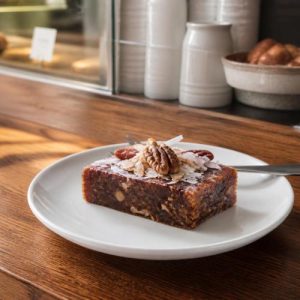
There was a time when the baking on the cafe counter asked nothing of anyone. The coffee had to be good, and the food had to be good, but the banana bread, the caramel slice and the muffin sat there on their own terms. A customer pointed, you plated, and nobody wondered whether they should. The slice was the small reward at the end of an order.
For a growing share of your customers that’s no longer how it goes. They still want something sweet with their flat white, but they now want it to be good for them as well as good to eat. The customer who used to point now pauses, leans in to read the card, asks a question, and sometimes leaves with only the coffee.
This article looks at why a treat now has to offer more than taste, and why the cafe baking customers come back for is the kind where being good for you and being good to eat come from the same ingredients.
What has changed in the way customers choose cafe baking?
Customers now choose cafe baking with a question in mind that they never used to ask, which is whether it’s worth having at all. The treat must earn its place in their day.
Part of what’s driving this is how often people come in. For many of your regulars the cafe is part of the daily routine, the coffee on the way to work or the stop between school drop-off and the office. A slice once a fortnight needs no excuse. The same slice every morning starts to need one, and the customer is the first to notice.
At the counter it looks like this. Someone walks along the display reading the cards before they look at the food. What’s in the slice? What’s the muffin sweetened with? They’re looking for a reason to say yes, and when the baking gives them none, they order the flat white and leave it there.
This isn’t the customer who needs a gluten-free or dairy-free option, since dietary needs have always shaped what cafes bake. This is the ordinary customer with no restriction at all. Because there’s no single request to answer, they’re easy to overlook.
Why do so many healthy bakes sell once and not again?
The obvious response is to add something. A scoop of protein powder goes into the brownie, seeds get pressed onto the top of the slice, and the card lists everything that’s been put in and everything that’s been left out.
Goodness added this way usually tastes like it. Protein powder can pull moisture out of a batter, so the brownie comes out dry. The customer buys it once because the card persuaded them, eats it, and finds it a little drier, a little plainer, a little less of a treat than the one it replaced. They don’t buy it again.
For the cafe, that shows up slowly. The new bake sells well while it’s a novelty, then drifts to the corner of the display where things wait for the end of the day. It’s easy to conclude that customers didn’t really want the healthier option, when more often they wanted it and it let them down.
What makes healthier cafe baking worth coming back for?
The bakes that work are the ones where what makes them good for you and what makes them good to eat are the same thing. Customers feel that straight away, even if they couldn’t say why.
Wholemeal spelt flour is a useful example. It carries more of the grain than refined white flour, and it gives a loaf or a muffin a nutty depth that plain flour can’t.
Dates work in a slice for a similar reason. They replace some of the refined sugar, and the caramel richness they bring is a large part of why a date slice is so good. They’re still sugar, though, and a card that pretends otherwise won’t convince anyone. What dates offer is a sweetness with more flavour in it, and some of the fruit’s fibre alongside. That’s a fair thing to put in front of a customer, and it needs no defending because they can taste it.
The shift worth making is in which ingredients you choose. Look for the ones whose benefit turns up as flavour or texture, and the bake explains itself without a list of claims attached.
Where do superfood ingredients belong in cafe baking?
Superfood ingredients belong in cafe baking wherever they add something the customer can taste, see or feel in the bite. Used that way, they add nourishment to a bake without needing to announce it. Used as a label, they’re another version of the protein brownie.
Many cafes already use these ingredients at the smoothie counter or in the acai bowl, and they carry into baking better than people expect. They’re already on the shelf, and your staff already know how they behave, which takes much of the guesswork out of trying them in the oven.
A freeze-dried raspberry powder will colour an icing pink and make it taste of raspberry, which artificial colour can’t do. Seeds give a loaf crunch and a toasted edge before they give it anything else. In each case the customer notices the ingredient as part of the eating.
The test for any of these is simple. If you took the ingredient out, would the customer miss it when they ate the bake, or only when they read the card? It’s worth asking of every bake you sell, not just the new ones.
What does this mean for the cafe that bakes its own?
For the cafe that bakes its own, this change is an opportunity, because what makes a bake healthier is decided when the recipe is written and the ingredients are chosen. A cafe that bakes in-house makes those decisions itself. It can choose the flour for its flavour, sweeten with fruit where fruit does the job better, and build a bake around an ingredient because of what it brings to the bite.
It can also listen. The questions customers ask across the counter about what’s in the slice, what sweetens it and what it’s made with are a running account of what they want from the baking, and they can shape the next batch. A few months of paying attention to them will tell you more than a survey would.
None of this means the classics must go. Some customers will always want the caramel slice exactly as it is, and a display of nothing but virtuous bakes would lose them.
To find ingredients that make your baking healthier in ways your customers can taste, browse the Opera Foods baking range and the superfoods range.
This article was reproduced on this site with permission from operafoods.com.au the “Café Baking Ingredients Supplier”.
See original article:- Why Do Customers Expect More From Cafe Baking?
Cafe Food Waste : Why Your Fresh-Is-Best Instinct Might Be Costing You Money

If you run a cafe in 2026, you already know the margin picture has changed. Coffee costs have surged. Wages are up. The average cup price is tracking toward seven dollars in metro areas, and it still may not be enough to cover the gap.
The thing separating the cafes that stay open from the ones that close is not usually product. Most operators already know how to make good coffee, build an appealing menu and present well on social media. What is killing margin is operational complexity, and Hospitality Victoria’s 2025 pulse check put a number on it: 67% of Melbourne cafe owners now cite operational complexity as their top pain point, ahead of rent, ahead of wages.
That covers a wide territory. Supplier ordering workflows that still run on texts and scribbled notes. Rostering decisions made on instinct rather than data. Invoice errors from major distributors that go unnoticed because nobody has time to audit them. But one of the biggest and least measured contributors sits in your bin.
What follows is a look at how cafe food waste connects to menu composition, why the instinct to reject shelf-stable ingredients may be outdated, and what the margin recovery looks like when you rethink the balance.
How much of your revenue is going into the bin?
Most cafe owners know spoilage happens. Very few track it. When cafes begin logging daily food waste, they typically discover 5-10% of total revenue leaking into the bin within the first two weeks of measurement. A healthy operation generally runs spoilage at 1-3% of revenue. Above 5% means something structural is wrong with how you buy, prep or store.
The primary culprits are predictable. Milk spoils because cafes over-order relative to actual demand. Pastries and baked goods go unsold because cabinet fills are based on optimism rather than data. Fresh produce sits unused because it does not get consumed before it turns. These are not failures of intention. They are the natural consequence of menus built around perishable ingredients with short use-by windows and limited flexibility when demand drops unexpectedly.
Which raises a question most operators have not stopped to ask. How much of your waste is a product of your menu composition rather than your ordering discipline?
Why are operators still rejecting shelf-stable ingredients?
There is a deeply held belief in Australian hospitality that fresh is always better. And for a long time, that belief was entirely justified. The powdered and reconstituted ingredients that dominated foodservice through the 1990s and 2000s deserved the scepticism they attracted. They tasted like what they were: cheap shortcuts dressed up as convenience. The industry’s swing toward fresh, whole ingredients was a correction that needed to happen, and it produced genuinely better food and drinks.
The problem is that the correction overcorrected, and the mental model stuck. For many operators, “powdered” still triggers the same association it did two decades ago, even though the ingredient landscape underneath that word has changed completely.
Take fruit and vegetable powders as an example. A concentrated beetroot or banana powder produced through modern low-heat evaporation has almost nothing in common with the freeze-dried, flavour-stripped products that gave the category a bad name. The colour, nutrient density and flavour profile are retained because the process does not damage them. These are not substitutes pretending to be fresh. They are concentrated forms of the same produce, with shelf stability measured in months rather than days.
That shelf stability is not just a storage convenience. It changes the operational economics of every menu item built around them.
What if your menu composition is driving your spoilage?
Consider two versions of smoothie production. In the first, you are ordering fresh fruit three times a week, prepping it each morning, managing ripeness windows, and binning whatever does not get used before it turns. Your waste exposure on those ingredients starts the moment the delivery arrives, and it compounds every day demand falls short of forecast.
In the second, your base ingredients are concentrated fruit and vegetable powders with a long shelf life. You add milk or coconut water at the point of service, maybe with some frozen banana. The visual and flavour quality of the finished product is comparable, but your waste profile is structurally different. The powders do not spoil on a Tuesday because Monday was quiet. You are not binning half a punnet of berries because foot traffic dropped 30% on a public holiday.
This is not an argument against using fresh ingredients. It is an argument against treating “fresh versus not fresh” as a binary that determines quality. The actual quality question is what ends up in the customer’s glass, and a smoothie built on a concentrated spinach or beetroot powder base with fresh fruit on top can deliver on flavour, colour and nutrition without carrying the same waste risk as one built entirely from perishable produce.
What does the spoilage actually cost you over a month?
The numbers are worth doing on your own menu. Take any item where you are currently using exclusively fresh produce, estimate your weekly spoilage on those ingredients, and calculate what that costs you over a month. Then ask whether a shelf-stable base ingredient could carry the same quality outcome with a fraction of the waste exposure.
For most cafes the answer is yes, and the margin recovery is not trivial. Even modest reductions in spoilage rates move the needle when you are already operating in the narrow band between 1% and 5% of revenue.
The broader point is that menu composition is an operational decision as much as a creative one. The cafes navigating 2026 successfully are not just the ones with the best drinks or the most interesting food. They are the ones treating every menu item as a set of inputs with cost, waste and labour implications, and making choices accordingly.
Fresh is not always best. Best is what gives your customer a great product and gives you a margin you can sustain. Sometimes those are the same thing. More often than you might expect, the shelf-stable option gets you closer to both.
Why not take a look at Opera Foods range of store cupboard superfoods and see how you could reduce your cafe food waste margins.
This article was reproduced on this site with permission from operafoods.com.au the “Wholesale Fruit Powder Suppliers”.
See original article:- Cafe Food Waste Why Your Fresh-Is-Best Instinct Might Be Costing You Money
Healthy Seeds for Cafés Are an Easy Menu Upgrade
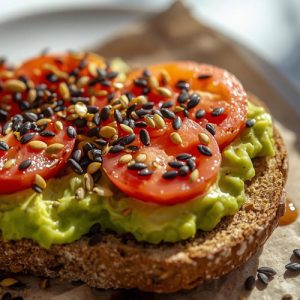
Most café menus already carry the dishes that seeds improve. Those customer favourites such as smoothie bowls, Avo toast, banana bread, grain salads, and porridge. Healthy seeds for cafés are not a new menu category. They are a simple upgrade to items customers already order every morning, adding nutritional value and visible texture without requiring a new recipe, a new supplier relationship or any change to kitchen workflow.
As healthy seed toppings for breakfast bowls, porridge and baked goods, they do more nutritional and textural work per teaspoon than almost any other ingredient. The question is not whether to stock them. It is which ones to stock, what each one contributes, and how they fit your existing menu.
What Do Seeds Add to a Café Dish?
Seeds change the nutritional profile of a dish and the physical experience of eating it at the same time. Most seeds are dense in fibre, protein, and essential fatty acids. They carry meaningful amounts of minerals like magnesium, zinc, iron and phosphorus.
Seeds give crunch to soft dishes and visual contrast to pale ones. Black sesame seeds on a white smoothie bowl, pepitas across a pumpkin soup, hemp hearts on avocado toast. These are visible cues that a dish has been finished with care. Customers read texture and colour as quality signals before they take a bite.
Which Seeds Should a Café Stock and What Does Each One Do?
Seeds all behave differently in a dish, and knowing the difference determines where each one works best. Some absorb liquid and change the texture of whatever they are added to. Others sit on top and hold their crunch for hours.
Chia
Chia seeds are roughly 40% fibre by weight and high in omega-3 fatty acids. Their defining behaviour is absorption. Chia seeds can take up around eight times their weight in water, forming a gel-like coating of mucilage. This makes them a natural thickener in smoothies, puddings and overnight oats.
When used as a topping on dry dishes they hold their crunch, but in anything with moisture they soften within minutes. Flavour is effectively neutral, which means chia takes on whatever it is mixed with.
Hemp Hearts
Hulled hemp seeds are one of the few plant sources of complete protein, containing all essential amino acids. They have a soft, slightly creamy texture and a mild nutty flavour. Unlike chia and flax, hemp hearts do not gel or absorb liquid, which means they hold their character on top of a dish. They are high in both omega-3 and omega-6 fatty acids in a ratio (roughly 3:1) that is considered nutritionally favourable.
Hemp hearts are particularly well suited to dishes where a protein claim matters to the customer: porridge, smoothie bowls, grain salads.
Linseed (Flax)
Linseeds are rich in omega-3 fatty acids and lignans, a group of antioxidant plant compounds. Like chia, linseed is mucilaginous and works well as a binder or thickener, which is why it appears in vegan baking as an egg substitute. The key difference from chia is that linseeds need to be ground to release their nutrients. Whole linseeds pass through the digestive system largely intact.
For café use, this means ground linseed (or an LSA mix) is the more effective format for smoothies and baking, while whole seeds work for visual crunch on a finished dish.
Pumpkin Seeds (Pepitas)
Pumpkin seeds are larger, more visually prominent and more assertively flavoured than the seeds above. They are high in zinc, magnesium, iron and phosphorus, and deliver a satisfying crunch that holds well even in dressed salads and warm dishes.
Pepitas work best where you want a visible, textural anchor rather than a background nutritional boost: scattered across a soup, tossed through a grain bowl, or used as the main crunch element on a roasted vegetable plate.
Sunflower Kernels
Organic sunflower kernels are an excellent source of vitamin E and contribute a mild, slightly sweet nuttiness. They are versatile enough to work across both sweet and savoury dishes and hold their crunch well in cold applications. Sunflower kernels are also one of the more cost-effective seeds, which matters if you are adding them across multiple menu items.
For customers with nut allergies, sunflower seeds (alongside pepitas) offer a way to add crunch and nutrition without triggering a tree nut concern.
Sesame
Black sesame seeds deliver a striking visual contrast on light-coloured dishes. They are rich in calcium, magnesium and phytosterols, and carry a more pronounced nutty flavour than most other seeds on this list.
Sesame works in both sweet and savoury contexts: over a smoothie bowl or acai bowl for visual impact, across Avo toast alongside hemp hearts for crunch and protein, or in the crust of a pastry.
How Do Seeds Fit Dishes a Café Already Sells?
Seeds improve dishes the kitchen is already producing without new recipes, new equipment or any change to workflow. One or two containers on the bench and a consistent approach to finishing is all it takes.
Smoothie Bowls and Acai Bowls
Chia and linseed blended into the base add body and fibre, thickening the texture and extending the nutritional reach of the bowl. Hemp hearts and pepitas on top add protein, crunch and colour.
The combination turns a fruit-and-granola bowl into a meal that holds a customer through the morning, and a dish that photographs well enough to justify its price point.
Porridge and Overnight Oats
Ground linseed stirred through porridge adds omega-3 and a subtle nutty depth. Hemp hearts and chia on top add protein and texture contrast against the soft base.
For overnight oats, chia is structurally useful: it thickens the mix and improves the set. A teaspoon of chia per serve, added the night before, produces a creamier, more cohesive result than oats and milk alone.
Avo Toast and Open Sandwiches
Sesame and hemp hearts are the natural pairing here. Black sesame adds visual contrast and a faintly toasted flavour against the avocado. Hemp hearts add protein without changing the character of the dish. Together, they elevate a standard Avo toast into something that looks and eats like a more considered offering.
Pepitas and sunflower kernels work on heartier open sandwiches, particularly anything with roasted vegetables or hummus.
Banana Bread, Muffins and Baked Goods
Seeds scattered over banana bread or muffins before baking signal that these are made with care. Pepitas and sunflower kernels hold up well through the oven. Linseed and chia can be mixed into the batter itself for added fibre and binding.
When a warmed slice of banana bread is served with yoghurt and a sprinkling of seeds, it moves from a counter impulse buy to a plated item with a greater perceived value.
Salads and Grain Bowls
Pepitas and sunflower kernels replace croutons with something more nutritious and longer lasting in texture. They hold their crunch in a dressed salad where bread-based toppings go soggy within minutes.
For grain bowls built on rice, quinoa or freekeh, a generous scattering of mixed seeds adds the textural contrast that these dishes need to feel complete.
Does a Single House Seed Blend Make Sense?
A pre-mixed blend simplifies service and reduces waste, but it works better for dishes where seeds are mixed in than for dishes where they need to be visible.
The case for
The kitchen uses one product across multiple dishes instead of reaching for six different packets. Consistency improves because every serve gets the same combination. Waste reduces because seeds are used faster from one open container rather than slowly from several.
The case against
A blend is a compromise, and not all compromises serve the food well. Chia behaves differently from pepitas. One absorbs liquid and gels; the other sits on top and crunches. Mixing them into one container means you lose the ability to use each seed where it performs best. Chia blended into a smoothie base does different work from chia scattered on top of a finished bowl, and in a pre-mixed blend you cannot separate the two uses.
There is also a visual argument against a blend. Black sesame on a white smoothie bowl is a deliberate aesthetic choice. Pepitas scattered over banana bread before baking is another. These effects disappear when every dish gets the same mixed handful.
A café that wants seeds to be part of its visual identity, not just its nutritional story, is better served by keeping two or three individual seeds on the bench and using each one for a reason.
The middle ground
The practical middle ground is often two containers. A general-purpose blend for smoothies, porridge and baking (where seeds are mixed in and the individual identity matters less), and one or two whole seeds kept separately for finishing dishes where the visual and textural specificity counts.
Seeds are an ingredient decision, not a menu overhaul. They add nutrition, texture and visual finish to dishes your kitchen already makes well. The cost per serve is minimal, the preparation is close to zero, and the effect on the finished plate is immediate.
See the full Opera Foods healthy seeds range to find the right seeds for your menu.
This article was reproduced on this site with permission from operafoods.com.au the “Wholesale Café Suppliers”.
See original article:- Healthy Seeds for Cafés Are an Easy Menu Upgrade
Which Protein Powder in a Café Smoothie?

The customer ordering a protein add-on in your café smoothie already knows more than you might expect. They’ve read labels. They know whey from pea. They have an opinion about sweeteners. What they’re deciding, when they order, is whether your choice of protein is worth it.
What does your customer already know when they ask for protein?
Label literacy in this category has moved fast. The customer ordering a protein smoothie in 2025 is, with increasing frequency, someone who has read an ingredient panel before, on a supermarket tub, on a ready-to-drink bottle, on a product they’ve been using at home. They know that “protein powder” is not a single thing. They know that whey comes from dairy. They know that pea and hemp are plant-based options. Many know, at least loosely, what an isolate is versus a concentrate.
This is not the customer who simply wants more of a macro and doesn’t care how they get it. This is a customer who will notice if you’re using a flavoured, sweetened blend and calling it a protein add-on. They’ll notice the artificial sweetener aftertaste. They’ll notice if the texture is gluey or the smoothie tastes like a sports supplement rather than something made in a kitchen.
What this means practically, the protein source you stock is visible to your customer in a way that other back-of-house ingredients are not. It’s worth treating it like one of your coffee beans, as something that reflects a considered sourcing decision rather than a default.
What does adding protein powder to a café smoothie do for the customer?
Adding protein powder increases the protein content of the drink, typically by 20–25g per standard add-on dose, which affects satiety and macronutrient balance. Beyond the nutritional function, it’s also a signal. A customer who orders protein is indicating they’re thinking about what the drink is doing for them, not just how it tastes. And the source itself carries its own signal, and whey, pea, and hemp are not sending the same one.
Whey protein concentrate
Whey protein concentrate reads as high-performance and conventional. It’s the category default, the thing most customers picture when they hear “protein powder.” That familiarity works in its favour. Customers know what they’re getting, trust the protein quality (whey concentrate at 80% delivers a complete amino acid profile), and expect it to dissolve cleanly. It also tells the customer that dairy is involved, which is a non-trivial piece of information for anyone who’s lactose sensitive or eating plant-based.
Offered without qualification, whey is a fine choice for a broad café customer. Offered without acknowledgment that it’s dairy-derived, it creates a real problem for a section of your smoothie clientele.
Pea protein isolate
Pea protein isolate reads as plant-based and ingredient-conscious. An 80% isolate is close to whey in protein concentration, and pea has become the dominant plant protein in the Australian market precisely because it’s legible to customers who’ve been reading labels. It’s not exotic. It signals that you’ve thought about your plant-based customers without creating a niche, difficult-to-explain product.
For cafés where a meaningful proportion of the customer base eats plant-based or dairy-free, pea is increasingly the more useful default.
Hemp protein
Hemp protein reads differently from both. At 60% protein concentration, which is lower than pea isolate or whey concentrate, hemp is not primarily selling protein density. It’s selling a nutritional profile that includes omega-3 and omega-6 fatty acids alongside the protein, which is unusual in this category. A customer who recognises hemp protein knows this. A customer who doesn’t will need more explanation. Hemp signals botanical provenance and whole-food integrity in a way that the other two don’t, sitting closer to a superfood ingredient than a sports supplement. That’s useful positioning for certain smoothie menus and customer demographics, but it requires the menu language to do some work.
Does the protein source affect the texture of a blended smoothie?
The sourcing decision has a direct consequence in the blender, and that consequence is what the customer experiences.
Whey protein concentrate
Whey dissolves readily in liquid and disperses cleanly when blended with fruit, milk, or a milk alternative. It contributes a slightly creamy texture at standard add-on quantities (typically 20–30g per serve). It has a mild, faintly milky flavour that is largely neutral against fruit forward or chocolate smoothie bases. The risk with whey is over-blending or adding to a very acidic base, which can produce a slightly grainy mouthfeel, though this is less pronounced in a well-constructed smoothie than in a shaker bottle.
Pea protein isolate
Pea protein has improved considerably in processing terms, but it retains a characteristic earthiness or beany note that surfaces depending on the smoothie base. In a banana and nut butter smoothie, it’s undetectable. In a lightly flavoured base such as coconut water and pineapple, it’s present. Texture-wise, pea isolate blends smoothly and contributes a slight thickness that works well in most café smoothie contexts. The key is pairing it thoughtfully. Pea protein performs best with flavours substantial enough to carry it.
Hemp protein
Hemp protein behaves differently from both. Because it retains some of the fibre and fat from the seed, it contributes a richer, slightly denser texture with more body than whey or pea at an equivalent dose. The flavour is distinctly nutty and herbaceous, which integrates well with certain bases (cacao, banana, oat milk, nut butters) and competes with others (citrus, tropical fruit, light berry). At the quantities used as a smoothie add-on, the texture contribution is a feature for the right smoothie; for a light, clean tasting fruit smoothie, it changes the character of the drink in ways the customer may not expect.
Why does the choice of protein powder matter for a café smoothie menu?
Pre-flavoured protein blends are formulated for direct to consumer use, mixed with water or milk on their own, consumed as a meal replacement or post-workout shake. They carry sweeteners, flavour compounds, and sometimes thickeners and emulsifiers that are calibrated for that context.
In a café smoothie, they create a conflict. Your smoothie already has flavour architecture. Fruit, dairy or alt-milk, possibly nut butter, oats, or a fruit powder. A flavoured protein blend imposes a second flavour system on top of that, and the result is a drink that tastes like it was made from a kit rather than from ingredients. The sweetener compounds are particularly problematic. Stevia in a smoothie that also contains ripe banana reads as too sweet in a specific, artificial way that experienced customers identify immediately.
An unflavoured, single-ingredient powder does none of this. It adds protein without adding competing flavour. It lets the smoothie taste like what’s in it. And critically, it lets you describe the ingredient honestly. “We use Boost Nutrients pea protein isolate” is a clean, direct answer to a customer who asks. A flavoured blend with seventeen ingredients is harder to describe and harder to defend.
What should I look for when choosing a protein powder for my café?
Clean label means the ingredient list is short, the ingredients are recognisable, and nothing has been added to perform a function that isn’t disclosed. For a protein powder used in a café smoothie context, this translates to three practical tests.
First, is the protein source the only ingredient, or close to it? A single-ingredient pea protein isolate is clean label. A “plant protein blend” with eight components, three of which are sweeteners, is not.
Second, does the protein concentration reflect the source? An 80% isolate is concentrated. A product listing “protein blend” that delivers 15g per serve from a 40g scoop is not, because it’s achieving its protein number through volume rather than quality.
Third, can you explain the ingredient to your customer without qualification? If the honest answer to “what protein do you use?” requires caveats (“it’s got a few other things in it but they’re fine”), the product is not earning its premium. If the answer is “it’s organic hemp protein, 60% protein, that’s all that’s in it,” the product is.
This matters because the customer paying the add-on premium has already made a judgement about the café’s sourcing standards. The protein powder is part of that judgement, whether or not it’s visible on the menu. A product that doesn’t meet the clean label test isn’t just a sourcing choice. It’s a gap between what the customer believes they’re getting and what they’re actually getting.
Ready to stock a protein powder your customers can trust? Explore the Boost Nutrients protein powder range.
This article was reproduced on this site with permission from operafoods.com.au the “Wholesale Café Suppliers”.
See original article:- Which Protein Powder in a Café Smoothie?
Autumn Vegetable Powders: A Cafe Guide
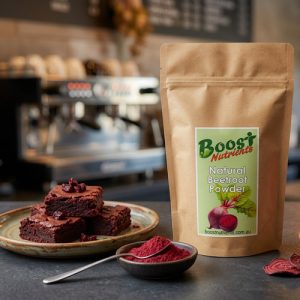
Autumn is one of the most visually rewarding seasons to cook and drink through, and the colours come from a surprisingly small pantry. Autumn vegetable powders give a cafe menu deep crimson beetroot lattes, warm amber carrot drinks, and rich green smoothie bowls, all achievable with a small range of concentrated ingredients and the confidence to use them across drinks, bowls, baking, and soups.
Vegetable powders are concentrated forms of their source vegetables, dried and ground into a shelf-stable powder. They are not a substitute for fresh vegetables on the plate. They are a different tool entirely, one that brings seasonal colour and flavour to a menu with ease.
The vegetables these powders are derived from are the ones customers naturally turn to as the weather draws in: beetroot, carrot, kale, spinach, and broccoli. The colours of autumn and winter are concentrated into a pantry format that works across the whole menu.
What Are Vegetable Powders and How Are They Different From Greens Blends?
Vegetable powders are single-ingredient products: one vegetable, processed and dried into powder form. They are distinct from the greens blends and spirulina-based powders that have occupied the greens category for years. A greens blend typically combines multiple ingredients, often including spirulina, wheatgrass, and other green superfoods, into a single product with a strong, grassy flavour that can be difficult to work with in cafe drinks and baking.
Single vegetable powders offer something different: a predictable, clean flavour and a specific, controllable colour. Beetroot powder delivers crimson. Carrot powder delivers amber. Kale, spinach, and broccoli powders deliver distinct shades of green. Each one does a specific job, and that specificity is what makes them useful in a commercial kitchen.
Our vegetable powders, produced under the Boost Nutrients brand, are produced from Australian-grown vegetables where possible, using a gentle low-temperature process that retains colour and flavour without additives or anti-caking agents.
Beetroot Powder: The Colour of Autumn in a Teaspoon
Beetroot is the defining colour of the Australian autumn palette, and beetroot powder is the most versatile and visually impactful of the vegetable powders on a cafe menu. Its deep crimson works in lattes, smoothie bowls, baked goods, and soups.
The flavour is earthy and gently sweet, complex enough to pair well with cacao, warming spices, and citrus. The concentration is significant: a single teaspoon carries the colour and flavour of a whole beetroot, which means a small amount delivers real impact without bulk.
Beetroot Latte
The application that has gained the most traction on autumn cafe menus, and the one that earns its place most immediately on a specials board.
Ingredients (1 × 300ml serve)
- 1 tsp Boost Nutrients Beetroot Powder
- ½ tsp ground cinnamon
- Pinch of nutmeg
- 1–2 tsp maple syrup
- 20ml hot water
- 250ml oat or almond milk
Method: Whisk beetroot powder, cinnamon, nutmeg, and maple syrup with hot water into a smooth paste. Steam milk to 65°C and pour slowly over the paste, stirring through. Serve in a clear glass mug and dust lightly with beetroot powder for a two-tone finish.
Adding a tablespoon of cacao to the paste deepens the flavour considerably and produces the red velvet cacao variation, alongside full recipes for five other warm autumn drinks, in Warm Drinks for a Cafe Menu: Six for Autumn 2026.
Suggested menu name: Autumn Beetroot Latte, or Red Velvet Cacao with the cacao addition.
Beetroot in Baking
Beetroot powder is at its most versatile in a commercial baking context. It adds the colour of the season without the watery texture of fresh beetroot puree, batches consistently, and does not affect the structure of the recipe at the quantities needed for colour. One to two teaspoons per twelve-serve batch delivers clear colour without making the earthy flavour dominant. Beyond two teaspoons, the earthiness becomes more pronounced, which works well in savoury applications but needs managing in sweeter ones.
The natural pairing is dark chocolate. A chocolate and beetroot brownie is the most obvious application: the deep crimson running through a dark, fudgy brownie looks striking on a counter and needs no garnish. Red velvet muffins work on the same principle, with the colour doing the seasonal work. Beetroot and dark chocolate scones are a more unexpected combination but a rewarding one, particularly alongside a golden latte on a cold morning.
Beyond chocolate, beetroot powder works in spiced autumn loaves alongside cinnamon, nutmeg, and orange zest. A beetroot and orange loaf cake, lightly spiced, has a warm rose colour that reads as unmistakably seasonal and pairs well with a cream cheese or labneh topping. In savoury baking, the earthiness is an asset: beetroot powder added to a savoury scone or flatbread dough alongside goat’s cheese and thyme produces something genuinely distinctive on a cafe counter.
For pancake or waffle batter, a half teaspoon per batch creates a warm blush that makes a standard breakfast stack feel seasonal without altering the flavour noticeably.
Beetroot in Bowls
A small amount of beetroot powder dissolved in warm water and swirled across the surface of a finished açaí or yoghurt bowl is one of the simplest and most effective bowl finishes of the season. The deep crimson against a white or purple base is immediately photogenic, takes seconds, and adds a genuinely seasonal note to a format that can otherwise feel disconnected from the time of year.
Beetroot powder can also go directly into the bowl base. Blended into a smoothie bowl with frozen banana and berries, it deepens the colour to a rich burgundy and adds a subtle earthiness that pairs well with the sweetness of the fruit. Topped with granola, seeds, and seasonal autumn fruit, it becomes one of the most visually distinctive bowls on the menu.
Beetroot in Soups
Add a teaspoon of beetroot powder per portion to a roasted pumpkin, carrot, or tomato soup during the final blending stage. It deepens the colour of an already seasonal dish, integrates cleanly into the existing flavour profile without competing with it, and adds a clear nutritional note to a menu description without overstating it.
Carrot Powder: Warm Amber for Drinks and Baking
Carrot powder is gentler in flavour than beetroot: naturally sweet, with a mild earthiness that makes it one of the most versatile powders across both sweet and savoury applications. The colour is warm amber-orange, unmistakably autumnal, and it works in lattes, muffins, smoothie bowls, and soups with very little adjustment to existing recipes.
Carrot and Ginger Latte
A warming, amber autumn latte. The ginger and cinnamon give it a spice profile that feels seasonal without being aggressive.
Ingredients (1 × 300ml serve)
- 5 tsp Boost Nutrients Carrot Powder
- ½ tsp ground ginger
- ¼ tsp ground cinnamon
- Pinch of turmeric
- 1 tsp maple syrup or honey
- 20ml hot water
- 250ml oat milk
Method: Whisk carrot powder, spices, and sweetener with hot water into a smooth paste. Steam oat milk to 65°C and pour over the paste. Dust lightly with cinnamon to finish. Serve in a ceramic mug.
Suggested menu description: carrot and ginger latte, warming, naturally sweet, and caffeine-free.
Carrot in Autumn Baking
Carrot powder pairs naturally with the spice profiles that define autumn baking: cinnamon, nutmeg, cardamom, and ginger. One to two teaspoons per batch added alongside fresh grated carrot intensifies both colour and flavour in carrot cake and carrot loaf, pushing the orange deeper without any other change to the recipe. In pumpkin and carrot muffins, it deepens the warm colour in the same way. A carrot and cardamom loaf, lightly sweetened with maple syrup, is one of the more elegant expressions of this powder in a cafe baking context.
Carrot powder also works in savoury applications. Added to corn fritter or vegetable patty batter, it deepens the golden colour and adds a gentle natural sweetness. In a roasted carrot and lentil soup, it intensifies the existing flavour without any perceptible change to the dish.
Carrot in Smoothie Bowls
Blended into a mango or pineapple smoothie base, carrot powder creates a vibrant orange bowl that transitions naturally from the lighter summer formats into something with more warmth and body. The colour anchors the bowl in the season, while tropical fruit toppings keep it fresh.
Greens Powder: Kale, Spinach, and Broccoli
The term “greens powder” on a cafe menu often conjures something thick and strongly flavoured, built on spirulina or wheatgrass. The individual vegetable powders in the Opera Foods range are a different proposition. Boost Nutrients Kale Powder, Boost Nutrients Spinach Powder, and Boost Nutrients Broccoli Powder are each derived from a single Australian-grown vegetable, and each one behaves differently in drinks, bowls, and baking.
Kale has the strongest flavour of the three: grassy and gently bitter, noticeable at higher quantities but easily balanced with fruit or sweetener at the amounts used in most cafe applications. Spinach is milder, with a softer green that works well in bowls, overnight oats, and baking, where a subtle colour is more appropriate than a vivid one. Broccoli powder has a gentle, slightly savoury quality that suits it to baking and savoury applications rather than drinks.
Autumn Green Smoothie Bowl
Ingredients (1 × 350ml serve)
- 1 tsp kale powder
- 1 frozen banana
- 1 tbsp chia seeds
- 120ml apple juice or coconut water
- 80ml Greek or coconut yoghurt
- A handful of frozen mango or pineapple
Method: Blend all ingredients until smooth. Pour into a bowl and top with granola, bee pollen, and seasonal autumn fruit: sliced figs, late-season berries, or thin apple.
Greens in Bowls and Drinks
Beyond the smoothie bowl base, kale powder works as a topping dust: half a teaspoon scattered across the surface of a finished bowl alongside bee pollen and chia seeds adds a deep green that creates a naturally seasonal colour palette with no additional styling. The combination of deep green, golden yellow, and white reads as considered rather than decorated.
Spinach powder blends more smoothly into lighter applications. Stirred into the liquid base of overnight oats before setting, it produces a soft, muted green that communicates something nutritious and seasonal without dominating the flavour. It also works in smoothies where kale’s bitterness might be too assertive: a spinach and pear smoothie with a teaspoon of spinach powder has a clean, bright green with a gentle flavour that suits the early autumn customer who is not quite ready to let go of lighter formats.
Greens in Savoury Baking and Cooking
One teaspoon of kale or spinach powder per batch added to savoury scone or bread dough produces a gentle green tint that reads as naturally wholesome. It pairs well with sharp cheese, pumpkin seeds, or fresh herbs, and the colour signals something seasonal without requiring fresh greens in the dough. A kale and cheddar scone or a spinach and feta roll both carry the colour of the season cleanly on a cafe counter.
Broccoli powder works particularly well in frittata and egg muffin batter, adding colour and a mild vegetable note to a cafe staple. Stirred into a white sauce or béchamel, it deepens the green and adds vegetable content to a dish without altering the texture. In savoury pesto or herb sauce, a teaspoon of broccoli powder alongside fresh herbs deepens the green and adds nutritional density without competing with the core flavours.
All three powders integrate cleanly into soups. A leek and potato soup with spinach powder, a pea and broccoli soup with broccoli powder, or a mixed greens soup fortified with kale all benefit from the deeper colour and the straightforward ingredient story that a single vegetable powder provides.
Storing Vegetable Powders in a Commercial Kitchen
The Boost Nutrients powders do not contain anti-caking agents, which means moisture management matters. Store all powders in airtight containers away from direct light, heat, and steam. Once opened, reseal the bag immediately and store it in a cool, dry place or in the refrigerator. If a powder clumps, it is still perfectly usable: break it up by hand or in a blender before measuring.
Small variations in quantity make a visible difference to colour, so it is worth standardising measures. A dedicated spoon for each powder, stored with the container, keeps colour consistent across service. For lattes and warm drinks, half to one teaspoon per serve is the right starting point. For baking, one to two teaspoons per twelve-serve batch delivers clear seasonal colour.
Beetroot paste for lattes can be pre-mixed in small batches at the start of service and portioned from there, which keeps preparation time negligible across a morning service. The same approach works for carrot paste in the carrot and ginger latte.
Where to Start
Beetroot is the natural entry point. The colour impact is immediate, the beetroot latte requires no new equipment, and it gives the cafe something to photograph and put on the specials board with minimal risk. Carrot into baking is the logical second step: adding carrot powder to existing autumn baking introduces the category to customers in a familiar context before it appears as a standalone drink. The greens powders follow naturally once the approach is established, as a topping dust on existing bowls, a base for a named seasonal green bowl, or an addition to the savoury baking that most cafes are already producing through autumn.
Browse the full Opera Foods vegetable powder range to find the right starting point for your autumn menu.
This article was reproduced on this site with permission from operafoods.com.au the “Wholesale Café Suppliers”.
See original article:- Autumn Vegetable Powders: A Cafe Guide
Maca Powder as a Cafe Ingredient

Maca powder has been sitting in the background of Australian cafe menus for years, added in small amounts to smoothie bowls and rarely given more thought than that. But it deserves more. The flavour is distinctive enough to carry a drink on its own, and the customers who find it tend to come back for it specifically.
The difference between a maca drink that works and one that does not comes down to understanding what the ingredient actually tastes like, which pairings bring out its best qualities, and how much to use.
What Does Maca Taste Like?
Maca has a strong, distinctive flavour best described as malty and caramel-like, with an earthy, slightly woody undertone that becomes more pronounced the more you use it. At low quantities, it reads as warming and naturally sweet. At higher quantities, that earthy quality takes over, and the drink becomes difficult to balance.
Raw Maca Is the Most Intense Form
The maca powder stocked by Opera Foods is raw, meaning it has not been through the gelatinisation process that removes the starch and produces a smoother, more neutral flavour. Raw maca is nutritionally intact and flavourfully the most expressive, but it also has the sharpest edges. Those edges are what need managing on a cafe menu.
This is not a reason to avoid it. It is a reason to use it deliberately. If you want to get the most from raw maca, treat the flavour as something to work with rather than something to mask.
How Much Is Too Much
A teaspoon to a teaspoon and a half per 300ml serving is the right range for most applications. Below that, the flavour contribution is negligible. Above that, the earthiness starts to dominate, particularly in drinks without a strong counterbalancing flavour. Start at the lower end and adjust once you have a read on your recipe and your customers.
What Pairs Well With Maca?
The ingredients that work best with maca share a common quality: they either complement its malt-caramel note or provide enough sweetness and richness to keep the earthiness in check.
The Best Pairings
Cacao is the most natural pairing. The two ingredients share a deep, slightly bitter quality that makes them genuinely complementary rather than competing. Cacao softens the rawness of the maca while maca adds body and a malty sweetness to the cacao. The combination is more interesting than either ingredient alone.
Vanilla is the other anchor pairing. Pure vanilla powder or extract brings a sweetness and aromatic quality that rounds out maca’s rougher edges without overwhelming its character. The maca and vanilla latte is the simplest and most approachable application of the ingredient on a cafe menu. Both it and a cacao and maca with cinnamon are among the six drinks covered in Warm Drinks for a Cafe Menu: Six for Autumn 2026, which includes full recipes and preparation notes for each.
Cinnamon works well in both the cacao and vanilla contexts, adding warmth that ties the flavours together and makes the drink feel distinctly seasonal. Maple syrup is the right sweetener for all maca applications: its caramel-like quality amplifies the maca note rather than working against it. Honey works similarly.
Oat milk is the best milk base for maca drinks. Its natural sweetness and body are a better match for the ingredient than almond or soy, and it steams well. Coconut milk works in richer, more indulgent applications.
What Does Not Work
Citrus is difficult with maca. The acidity cuts through the malt-caramel quality and tends to amplify the earthy undertone rather than balance it. Strong spices like cardamom and ginger, which work well with matcha and turmeric, compete with rather than complement maca’s flavour. Keep the spice profile simple: cinnamon is the safe choice.
Fruit bases in smoothies can work in small amounts, but maca’s intensity can read as an off note in a lighter, fresher context. It belongs on the warm drinks menu rather than the smoothie bowl menu for most applications.
How to Communicate Maca on the Menu
The customer communication challenge with maca is real. Most customers do not know what it tastes like, and describing it accurately without making it sound unappetising requires some care.
What Works on a Menu Description
Lead with the flavour experience rather than the ingredient name. “Warming and malty” communicates more than “maca powder” to a customer who has never tried it. “Naturally sweet” sets an accurate expectation. “Earthy” is honest but can be off-putting; save that descriptor for customers who ask.
The caffeine-free positioning is useful for the afternoon trade and for customers reducing their coffee intake, but do not lead with it in the menu description. It casts the drink as an absence rather than a presence, underselling it.
Maca sits within the adaptogenic category, and many customers who seek it out are drawn by its reputation for supporting energy and vitality. Staff do not need to make specific claims at the counter and should not. What helps is being able to acknowledge naturally that maca is a functional ingredient with a long history of use, and that customers who order it regularly tend to know exactly why they want it. That is usually enough.
Staff are the most powerful communication tool for any new ingredient. A team member who has tasted the drink, knows what to compare it to, and can describe it naturally at the counter will sell more of it than any menu description. The briefing does not need to be long: what it tastes like, what it is made from, and why it is worth trying.
Positioning It on the Menu
Maca sits naturally in the alternative latte category alongside matcha, turmeric, and cacao. Grouping it there gives customers a familiar frame of reference. A section titled “warm drinks” or “alternative lattes” on a specials board is more useful than embedding it in the main coffee menu, where it can get lost.
What is the difference between raw and gelatinised maca powder?
Raw maca powder is the whole root ground directly, with the starch intact. It has the most intense flavour profile and full nutritional content, but can be harder to dissolve in hot drinks and has a stronger earthy note. Gelatinised maca has been heat-treated to remove the starch, producing a powder that dissolves more cleanly and has a milder, slightly sweeter flavour. Opera Foods stocks raw maca. At the quantities used in cafe drinks, the difference in solubility is manageable with proper whisking.
Can maca powder be prepared in batches?
Yes, and batch preparation is the most practical approach for cafe service. A maca and vanilla paste or a maca and cacao paste, made at the start of service with a small amount of hot water, can be portioned quickly for individual drinks throughout the morning, with no additional prep time. Store covered and refrigerated if preparing the night before.
Is maca powder gluten-free?
Maca root itself is naturally gluten-free. However, as with many superfood powders processed in facilities handling multiple ingredients, cross-contamination is a consideration. Operators serving customers with coeliac disease or severe gluten intolerance should check the allergen statement on the specific product they are stocking before making any claims on the menu.
How should maca powder be stored?
In a sealed container away from direct light and heat. Once opened, a cool, dry pantry environment is sufficient for short-term storage. Maca powder absorbs moisture readily, which affects both flavour and the ease of dissolving it in drinks. A tight-sealing container is worth the small investment.
Is Maca Powder Worth Stocking?
For cafes already working with functional ingredients, maca is a natural addition. It shares a pantry with cacao, vanilla, and cinnamon — ingredients most health-focused cafe kitchens already stock — and a single 500g pack covers a significant number of serves at the quantities this ingredient requires.
The margin profile is strong. Ingredient cost per serve is low, and a named drink with a clear flavour story sits comfortably at a speciality coffee price point. The customers who discover maca on a cafe menu tend to come back for it specifically, which is a different and more valuable relationship than the customer who orders whatever is at the top of the menu.
Opera Foods Organic Maca Powder 500g from our Boost Nutrients brand is a raw, organic product of Peru. At the quantities used in cafe drink applications, a 500g pack gives you a reliable run of serves before needing to reorder.
This article was reproduced on this site with permission from operafoods.com.au the “Wholesale Café Suppliers”.
See original article:- Maca Powder as a Cafe Ingredient
Warm Drinks for a Cafe Menu: Six for Autumn 2026

As Australian mornings cool through March and April, warm drinks become one of the most commercially rewarding categories for a café menu to get right. Customers who spent the summer on cold brew and iced matcha are ready for something that feels like the season has shifted, and cafes that move deliberately at this point in the year tend to build the kind of morning-ritual loyalty that is hard to win back once it is lost.
The six drinks below are all non-alcoholic, all practical in a real commercial kitchen, and all drawn from the functional ingredient territory that is reshaping what Australian cafes put on the menu in 2026. They span earthy, spiced, chocolatey, and malty profiles, giving you options for different parts of the day and different corners of your customer base.
What Can I Add to My Cafe Menu Instead of Hot Chocolate This Autumn?
The most commercially interesting warm drinks for an autumn cafe menu are those that go beyond hot chocolate while occupying the same occasion: something warming, satisfying, and worth paying a speciality price for. Cacao drinks, spiced matcha lattes, turmeric golden milk, and beetroot lattes are all establishing themselves as permanent fixtures in forward-thinking Australian cafes in 2026, each with its own flavour story and customer following.
The generational shift driving demand for this category is explored in depth in Non-Alcoholic Cafe Menu: Why Gen Z Changed the Game.
Cacao with Maca and Cinnamon
Cacao is establishing itself as a genuine premium alternative to coffee on the Australian cafe menu, and autumn is its natural season. Richer and more complex than a standard hot chocolate, it has a depth of flavour that rewards a good recipe and a customer base actively seeking it.
The addition of maca is what makes this drink distinctive. Maca brings a malty, caramel undertone that softens the cacao’s intensity and adds a functional dimension that resonates with health-conscious customers without needing to be laboured on the menu. Cinnamon rounds it out and gives it a warmth that feels unmistakably autumnal.
Ingredients (1 × 300ml serve)
- 5 tbsp cacao powder
- 1 tsp maca powder
- ½ tsp ground cinnamon
- 1 tsp maple syrup or coconut sugar
- 20ml hot water
- 250ml oat or full-cream milk
Method Whisk cacao, maca, cinnamon, and sweetener with the hot water into a smooth paste. Steam milk to 65°C and pour over the paste, stirring through. Dust with cacao powder and a pinch of cinnamon to finish. Serve in a ceramic mug.
Suggested menu description: cacao with maca and cinnamon, earthy, warming, and coffee-free.
Spiced Matcha Latte
Matcha remains the dominant speciality latte ingredient in Australia, but the most interesting versions appearing on menus in 2026 are those that move beyond the powder alone. A spiced matcha latte applies the warming logic of a chai to the clean, grassy base of quality matcha, and the result is a drink that feels both familiar and genuinely seasonal.
Cardamom, ginger, and a pinch of black pepper are the right combination. They add warmth and complexity without overwhelming the matcha. Served in a clear glass, the colour layering of a well-made spiced matcha is one of the more photogenic drinks on an autumn menu.
Ingredients (1 × 300ml serve)
- 1 tsp matcha powder
- ¼ tsp ground cardamom
- ¼ tsp ground ginger
- Pinch of black pepper
- 1 tsp honey or maple syrup
- 30ml hot water at 70–75°C
- 250ml oat milk
Method: Whisk matcha, spices, and sweetener with hot water until smooth and frothy. Steam oat milk to 65°C and pour over the matcha base. Finish with a light dusting of matcha powder. Serve in a clear glass to show the colour layering.
Suggested menu description: spiced matcha latte, matcha with cardamom, ginger, and a whisper of pepper, warming and grounding.
Beetroot Red Velvet Latte
The beetroot latte is one of the most visually compelling drinks you can put on an autumn cafe menu. The deep crimson colour of a well-made beetroot and cacao combination is striking in a clear glass, photographs exceptionally well, and gives your social content a strong seasonal visual that summer’s greens and pale tones cannot match.
Beetroot is peak-season produce through March to May in Australia, which gives this drink a genuine seasonal story beyond its appearance. Combined with cacao, cinnamon, and a pinch of nutmeg, it produces a drink that is earthy-sweet and subtly spiced, distinct from both a standard hot chocolate and a plain beetroot latte.
Ingredients (1 × 300ml serve)
- 1 tbsp cacao powder
- 1 tsp beetroot powder
- ½ tsp ground cinnamon
- Pinch of nutmeg
- 1–2 tsp maple syrup or coconut sugar
- 20ml hot water
- 250ml oat or almond milk
Method: Whisk cacao, beetroot powder, spices, and sweetener into a smooth paste with hot water. Steam milk to 65°C and pour over the paste, stirring through. Finish with a dusting of beetroot powder or cacao for a two-tone effect. A clear glass mug is essential: the colour is the selling point.
Suggested menu description: red velvet cacao, beetroot and cacao with cinnamon and nutmeg, rich, naturally coloured, and coffee-free.
Turmeric Golden Milk
Golden milk has earned its place on the Australian cafe menu through staying power rather than trend cycles. It delivers on flavour as well as on its functional story, photographs its warm golden colour beautifully, and is one of the easiest drinks for staff to describe with confidence at the counter. For cafes adding warm drinks to an autumn menu, it is the most reliable starting point.
The key to a golden milk that earns its price is preparation. The spices need time in warm milk to bloom properly, and that few minutes of gentle heating makes a meaningful difference to the depth of flavour in the finished drink.
Ingredients (1 × 300ml serve)
- 1 tsp ground turmeric
- ½ tsp ground ginger
- ½ tsp ground cinnamon
- Pinch of black pepper
- ½ tsp coconut oil
- 1 tsp honey or maple syrup
- 250ml full-cream or oat milk
Method: Combine all ingredients in a small saucepan and warm gently over a low heat for three minutes, whisking continuously. Strain into a ceramic mug or short glass tumbler. Finish with a light dusting of ground turmeric or cinnamon.
Note: the black pepper is not optional. It activates curcumin absorption and is worth including even if it is not mentioned on the menu.
Suggested menu description: golden milk, turmeric, ginger, and cinnamon in warm oat milk, naturally caffeine-free.
Maca and Vanilla Latte
Maca is gaining real traction as a standalone flavour ingredient on Australian cafe menus, moving beyond its role as a background superfood addition to a drink customers order specifically for its taste. Its distinctive malt-caramel note is genuinely interesting and positions well as a coffee alternative for customers managing their caffeine intake.
The maca and vanilla latte is the simplest drink on this list, and that is its strength. No competing spices, no additional powders. The maca and vanilla do all the work, resulting in a drink that is warming, naturally sweet, and memorable enough to generate repeat orders.
Ingredients (1 × 300ml serve)
- 5 tsp maca powder
- ½ tsp pure vanilla powder or ¼ tsp vanilla extract
- 1 tsp maple syrup or honey
- 20ml hot water
- 250ml oat milk
Method: Whisk maca, vanilla, and sweetener into a smooth paste with hot water. Steam oat milk to 65°C, then pour it over the paste, stirring through. Dust lightly with maca powder to finish. Serve in a ceramic mug or clear glass.
Suggested menu description: maca and vanilla latte, warming, malty, and naturally sweet, caffeine-free.
Spiced Cacao with Chilli and Orange
Cacao, dried chilli, orange zest, and cinnamon combine to create a serious depth of flavour and a story that staff can tell naturally: it draws on the ancient tradition of spiced cacao while feeling bright and seasonal with the addition of fresh citrus.
The key is restraint with the chilli. A small amount adds a slow warmth that builds pleasantly through the drink. Too much overwhelms the cacao. Start conservatively and adjust once you have a read on your customer base.
Ingredients (1 × 300ml serve)
- 5 tbsp cacao powder
- ½ tsp ground cinnamon
- ⅛ tsp dried chilli flakes or cayenne
- Zest of ¼ orange
- 1–2 tsp maple syrup or coconut sugar
- 20ml hot water
- 250ml oat or full-cream milk
Method: Whisk cacao, cinnamon, chilli, orange zest, and sweetener into a smooth paste with hot water. Steam milk to 65°C and pour over the paste, stirring through. Finish with a curl of fresh orange zest across the foam and a light dusting of cacao powder. Serve in a small ceramic cup for an espresso-style experience, or a larger mug for a longer drink.
Suggested menu description: spiced cacao with chilli and orange, a slow heat and bright citrus, coffee-free and warming to the last sip.
How to Introduce These Drinks Without Overwhelming Your Kitchen
Six drinks are too many to launch at once. A more practical approach is to choose two or three that match your current pantry and the flavour preferences you already see in your customer base, then introduce the others as seasonal specials through March and April. If you are still working out how to balance the summer holdovers on your menu with new autumn additions, Your Autumn Cafe Menu Transition Starts Now covers that in detail.
Which Drinks to Prioritise First
The golden milk and the cacao with maca and cinnamon are the most straightforward starting points: familiar formats, simple preparation, and immediate visual appeal. The beetroot red velvet latte and the spiced matcha are the strongest candidates for social content, given their colour and visual distinctiveness. The maca and vanilla latte and the spiced cacao with chilli and orange tend to build a slower but more loyal following once customers discover them.
Batch Preparation
All six drinks use spiced paste or powder bases that can be prepared in batches at the start of service. A batch of turmeric paste, a batch of cacao and maca paste, and a pre-mixed spiced matcha powder kept in a sealed container will cover most of a morning service without any meaningful additional prep time. The beetroot and cacao paste for the red velvet latte can be made the same way. Batch preparation is what makes these drinks commercially viable at volume.
FAQ
What is the difference between a cacao drink and hot chocolate?
A cacao drink uses minimally processed cacao powder, which retains more of the natural flavour compounds and has a slightly more intense, less sweet profile than standard hot chocolate. Hot chocolate is typically made with Dutch-processed cocoa or a pre-mixed powder that includes added sugar and often dairy solids. A well-made cacao drink has a depth and complexity that a standard hot chocolate does not, and it carries a functional story that resonates with health-conscious customers.
What does maca taste like in a latte?
Maca has a distinctive malt-caramel flavour with a slightly earthy undertone. In a latte, it reads as warming and naturally sweet, similar in character to a malted milk drink but with more complexity. It pairs particularly well with cacao, vanilla, and cinnamon.
Are these drinks suitable for customers avoiding caffeine?
All six drinks on this list are naturally caffeine-free or very low in caffeine. Cacao contains both theobromine and a small amount of caffeine, though significantly less than coffee or tea. Matcha contains caffeine, though significantly less than espresso. Golden milk, maca latte, and beetroot latte are entirely caffeine-free, making them strong options for afternoon trade.
How should these drinks be priced?
Functional warm drinks built around speciality ingredients like cacao, maca, and matcha sit comfortably at a speciality coffee price point. The ingredient cost per serve is low relative to that price point, making the margin profile strong. Naming the drink clearly and describing the key ingredients on the menu supports the price positioning without requiring explanation at the counter.
Can these drinks be made dairy-free?
All six drinks work well with plant-based milks. Oat milk is the most versatile choice across the range, with a natural sweetness and body that complements both cacao and matcha. Coconut milk works particularly well with the golden milk and the cacao drinks. Almond milk suits the beetroot red velvet latte well.
If you are looking to stock the superfoods and functional powders behind these drinks, browse the Opera Foods superfoods range.
This article was reproduced on this site with permission from operafoods.com.au the “Wholesale Café Suppliers”.
See original article:- Warm Drinks for a Cafe Menu: Six for Autumn 2026
Your Autumn Cafe Menu Transition Starts Now
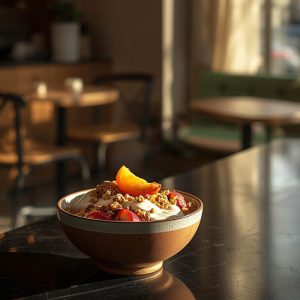
March is one of the trickiest months on the Australian cafe calendar, and the reason is balance. Getting your autumn cafe menu right means holding two things at once: summer regulars are still ordering cold brew and açaí bowls, but the mornings are cooling, and customers are starting to reach for something warmer. Move your menu too fast, and you frustrate loyal customers. Move too slowly, and you miss the seasonal moment entirely.
The art of it is knowing what to keep and what to introduce, and when. The transition does not have to be a switch. It can be a layering: keeping what is still working from summer, whilst introducing warming formats that feel timely and considered. That balance point, roughly 50/50 across March and into April, is where the seasonal opportunity sits.
Why the Transition Matters More Than the Season
The autumn cafe menu transition matters because the season itself gives you no clean starting gun. Autumn in Australia is genuinely unpredictable, particularly through March and early April. A menu that pivots entirely to warm, heavy formats too early risks alienating customers on the warmer days, and a menu that ignores autumn entirely misses the growing appetite for comfort and seasonal flavour that builds as the weeks progress.
The Case for Intentional Balance
The practical answer is deliberate balance: maintain your proven summer formats whilst giving customers clear, well-presented signals that something new and seasonal has arrived. When customers feel a cafe is responsive to the season, not behind it and not ahead of it, the result tends to be higher engagement, stronger return visits, and more opportunities to introduce premium seasonal items that earn their place on the menu.
What to Keep: Your Summer Non-Negotiables
Not everything on your summer menu needs to change. Some formats perform year-round because they meet needs that have nothing to do with temperature. Convenience, habit, health, and visual appeal all drive purchasing decisions regardless of what the thermometer says.
Cold Coffee Formats
Cold brew and iced coffee have become a year-round category for younger Australian customers, and pulling them from the menu in March is likely to cost more than it gains. Keep cold brew on, maintain your iced matcha if it is a strong seller, and let customers self-select. The demand will not disappear. It will simply become a smaller share of your overall drinks mix as autumn progresses.
Açaí and Smoothie Bowls
The açaí bowl has genuinely decoupled from seasonality for many consumers. It is a nutrition and convenience decision as much as a temperature one. Keep it on the menu through autumn, but consider making small seasonal adjustments to toppings rather than removing the format entirely. More on this below.
Light, Juice-Led Options
A portion of your customer base will continue to want lighter, fresher formats through the cooler months. Keep one or two smoothie options available, particularly if they are strong sellers in your morning trade, but reduce the complexity of the range rather than maintaining a full summer menu alongside the new autumn additions.
What to Introduce: Your Autumn Additions
The autumn additions do not need to be elaborate. What makes a seasonal introduction land well is clarity: a name that communicates the season, a flavour story that feels considered, and a presentation that signals something deliberate rather than something leftover from a trend cycle.
Warm Drinks
As mornings cool, warming drinks gain seasonal relevance quickly. The categories with the strongest commercial traction for Australian cafes in autumn 2026 share a common quality: they give customers something to come back for that they cannot easily replicate at home.
Cacao is establishing itself as a genuine premium alternative to coffee, richer and more complex than a standard hot chocolate, with a depth of flavour that rewards a good recipe. Autumn is its natural season. A spiced cacao drink with maca and cinnamon, or a chilli and orange variation that borrows from Mexican tradition, gives customers a reason to look beyond their usual order. The functional story around adaptogens and natural energy resonates strongly with health-conscious customers without needing to be laboured on the menu.
Spiced matcha lattes gain a new dimension in autumn with the addition of warming spices. Cardamom, ginger, and a pinch of black pepper transform a familiar drink into something that feels distinctly seasonal without requiring new equipment or significant prep time.
Beetroot is in peak season through autumn, and the deep crimson colour of a well-made beetroot latte is one of the most visually compelling drinks you can put in a clear glass. It photographs exceptionally well and gives your social content a strong seasonal visual that summer’s greens and purples cannot match.
Turmeric golden milk is an enduring performer in the functional warm drinks category. Familiar enough to order without explanation, distinctive enough to generate loyalty.
Warmer Bowl Formats
The transition from summer smoothie bowls to heartier granola and warmer bowl formats is autumn’s most natural menu shift. Customers who spent the summer eating chilled açaí bowls are ready for something with more texture and more substance, and the bowl format carries across beautifully.
Swap cold smoothie bases for yoghurt bases layered with premium granola, warming spices, and seasonal autumn fruit. Poached pears, figs, persimmons, and compotes made from quince or apple all come into their own from March onwards. These bowls take advantage of peak-season produce, photograph as well as any summer bowl, and carry a higher perceived value than a lighter chilled format.
One of the simplest transitions available is to keep your existing bowl format but offer a warm compote alongside fresh fruit. A spiced pear or fig compote, made in batches and gently reheated to order, adds a clear seasonal signal to a format your customers already trust.
Superfood topping upgrades are another low-effort way to signal the season. Bee pollen, chia seeds, cacao nibs, and vegetable powders add nutritional depth and visual interest to both summer holdovers and new autumn formats. A swirl of beetroot powder through a smoothie base or a scatter of cacao nibs over a warm granola bowl signals that your kitchen is engaged with the season without requiring any structural menu change.
How to Manage the Transition Operationally
Knowing what to keep and what to introduce is one thing. Managing it smoothly in a working kitchen is another.
Introduce Gradually, Not All at Once
Rather than launching several new items simultaneously, stagger the introductions through March. This gives your team time to build confidence with each new item, gives customers time to discover and return for favourites, and gives you useful commercial data about what is reordering, what is being photographed, and what is generating questions at the counter. One new warm drink and one new seasonal bowl per week is a manageable and effective pace.
Use a Specials Board Rather Than a Full Reprint
Introducing autumn additions as named seasonal specials gives you flexibility to test what lands before committing to a full menu update. It also creates a sense of occasion. A seasonal special feels more compelling than a permanent menu item to many customers, particularly when it is framed with a clear seasonal identity rather than presented as a routine addition.
Brief Your Team on the Story, Not Just the Recipe
The most powerful marketing for a new seasonal drink or bowl is a staff member who can describe it naturally and enthusiastically. A 60-second team briefing on what is in it, why it is seasonal, and what it tastes like is worth more than any menu description. Customers who feel they have been given a genuine recommendation are far more likely to order something new.
Keep the Pantry Versatile
The best autumn additions use ingredients that serve multiple purposes. A spiced pear compote works on a granola bowl, as a topping for overnight oats, and alongside a cacao drink. Beetroot powder appears in a warm latte, as a bowl swirl, and as a natural colourant in baked goods. Cacao is your warm drink base, your spiced chilli variation, and your bowl ingredient. Building from a small, versatile pantry keeps the transition manageable without limiting the seasonal range.
Reading Your Room: When to Shift the Balance
The right time to shift the balance of your autumn cafe menu is when your customers tell you to, not the calendar. The 50/50 framework is a guide for March and early April, not a permanent state. As autumn settles in through late April and into May, the balance naturally shifts toward the warmer formats, and you should let it.
The signals to watch are straightforward. If cold brew orders are tapering off, if customers are lingering longer over warm drinks, if the granola bowls are outpacing the smoothie bowls, these are indicators that your customer base is ready for the menu to lean more fully into autumn.
By May, most cafe menus will have moved to around 70 to 80 per cent warm formats, with cold brew and a single smoothie option remaining as year-round anchors. The cafes that manage this transition well tend to do it not through a single dramatic menu change but through a series of small, confident seasonal additions that build appetite gradually. By the time winter arrives, customers are already invested in the warming menu rather than mourning the summer one.
Not sure which ingredients to stock for the seasonal shift? Browse the Opera Foods range of superfood pantry ingredients — from cacao and maca to fruit and vegetable powders, seeds, and protein powders — and find what works for your autumn menu.
This article was reproduced on this site with permission from operafoods.com.au the “Wholesale Café Suppliers”.
See original article:- Your Autumn Cafe Menu Transition Starts Now
Banana Powder: How to Cut Added Sugar Without Losing Sweetness
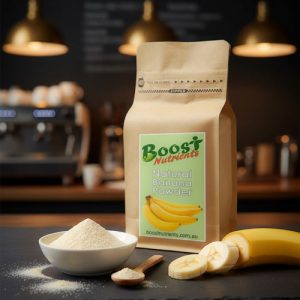
When customers ask for less sugar in their smoothies or coffee, they are rarely asking for less sweetness. They want the satisfaction of genuinely sweet flavours without the refined sugar they are working to avoid. Research shows 53% of consumers now view sugar as harmful to their health, and that creates a real gap between what people crave and what they are willing to order.
Banana powder bridges that gap. It delivers natural sweetness from whole fruit, approximately 77.7g of natural sugars per 100g, alongside fibre and resistant starch that refined sugar entirely lacks. The result tastes sweet, feels indulgent, and lets your menu genuinely claim to be no-added-sugar.
What Makes Banana Powder an Effective Natural Sweetener?
Not all banana powders are created the same way, and the production method has a direct bearing on what ends up in your customers’ drinks and food. Opera Foods’ Organic Banana Fruit Powder is made from 100% organic banana puree using a low-temperature continuous evaporation process. Unlike freeze-dried products, this gentle method preserves the colour, flavour, aroma, and nutrients of the fruit without damaging them. The result is a powder with higher nutritional value and more vibrant flavour than alternatives made with harsher processing.
The single ingredient is organic banana puree, nothing added beyond a small amount of anti-caking agent to keep the powder free-flowing. One kilogram is equivalent to approximately 3.8kg of fresh banana puree, delivering concentrated sweetness with a shelf life that fresh fruit cannot match. It is Australian-made and gluten-free.
When customers see “naturally sweetened” on your menu, they are looking for whole food ingredients, not clever reformulations of the same refined sugars. Natural fruit sugars come packaged with fibre that slows absorption, vitamins that support metabolism, and resistant starch that may help regulate blood sugar response. Banana powder gives you something credible to put behind that claim.
How to Add Natural Sweetness to Your Cafe Menu with Banana Powder
Can You Make No Added Sugar Cold Foam with Banana Powder?
Cold foam sweetened with banana powder transforms from a simple topping into a genuine flavour component: subtly tropical, creamy, and thick enough to hold its structure through the entire drink.
Blend 1 to 2 tablespoons of banana powder with 100ml of milk or oat milk and a touch of protein powder. The result foams beautifully, creating pale gold clouds that contrast well against dark coffee or vibrant matcha. The banana flavour stays subtle — customers notice creamy sweetness rather than distinct fruit. Paired with iced coffee, the slight tropical note complements coffee’s chocolate and nutty tones without overwhelming them, creating a more interesting flavour progression than a uniformly sweetened beverage.
How Do You Make a Naturally Sweetened Protein Smoothie?
Protein powders notoriously taste chalky, bitter, or artificially sweet. Banana powder masks these off notes completely whilst adding its own pleasant tropical flavour, creating no added sugar smoothies that taste like banana milkshakes despite containing 25 to 30g of protein per serve.
Blend 2 tablespoons of banana powder with vanilla or chocolate protein powder, frozen berries, 1 tablespoon of nut butter, and 250ml of milk. The banana adds body and natural sweetness, creating a thick, creamy texture without the frozen banana chunks that can dilute flavour and create an icy mouthfeel. The drink tastes genuinely indulgent — customers get the satisfaction of something rich and sweet alongside the recovery benefits they came for.
How Does Banana Powder Work in Smoothie Bowls?
A great smoothie bowl needs to be thick enough to support toppings, smooth without ice crystals, and naturally sweet without sugar syrup. Banana powder delivers all three simultaneously.
Mix 2 to 3 tablespoons directly into your smoothie bowl base, typically frozen acai, berries, or mango blended with minimal liquid. The powder thickens dramatically when blended, creating a dense, almost ice-cream-like consistency that holds granola, fresh fruit, and seeds without sinking. The natural sweetness means you can drop the honey, maple syrup, or agave typically drizzled over the top, so customers taste banana’s gentle sweetness woven through every mouthful rather than pooled in spots. Topped with crunchy granola, fresh berries, coconut flakes, and seeds, the contrast in texture makes the bowl genuinely satisfying.
Does Banana Powder Work as a Natural Sweetener in Coffee?
Not every customer wants a distinct flavour added to their coffee. Some simply want natural sweetness that enhances rather than transforms what is already in the cup.
Whisk 1 teaspoon of banana powder into espresso or steamed milk. In hot applications, the banana taste mellows considerably, leaving roundness and depth rather than tropical notes. It works particularly well in iced coffee and cold brew, where it blends smoothly into cold milk and adds a slight creaminess that makes dairy alternatives feel more substantial. For customers who typically reach for two sugars, it delivers familiar sweetness from a whole food ingredient they can feel good about.
Can Banana Powder Replace Sugar in Baked Goods?
Banana powder integrates cleanly into baked goods where sweetness is coming from multiple sources. Muffins, banana bread, and energy balls are particularly well suited — banana flavour is expected, and the powder folds into the dry ingredients without altering the recipe’s structure the way fresh banana can.
Add 2 to 3 tablespoons to your dry mix when making muffins or banana bread, reducing any added sugar by a comparable amount. For energy balls, blend banana powder with oats, nut butter, and a small amount of honey or dates. The flavour is genuine and recognisable — a banana and dark chocolate muffin or a peanut butter banana energy ball made with organic banana powder gives customers something they can pick up knowing the sweetness comes from whole fruit.
How to Store Banana Powder and Get the Best Results
Opera Foods’ banana powder has a shelf life of more than two years when stored correctly. Keep unopened stock in a cool, dry place below 20°C. Once opened, squeeze out as much air as possible, reseal the foil-lined bag quickly, and store it in the refrigerator or freezer. If the powder does lump or cake, it is still perfectly fine to use — simply break it up by hand or in the blender before measuring.
Start conservatively with quantities. Banana powder’s sweetness concentrates significantly, so begin with 1 to 2 tablespoons per serve in smoothies and beverages and adjust from there. The powder disperses rather than dissolves, so blend or whisk it thoroughly, and allow a little extra time for full hydration in cold applications before serving.
How to Describe Naturally Sweetened Menu Items to Customers
“Naturally sweetened with organic banana powder” communicates whole food sourcing at a glance. “No added sugar” and “no refined sugar” speak directly to customers actively managing their intake, and small menu icons can help them find suitable options quickly without having to ask.
When customers do ask, the answer is simple: banana powder is naturally sweet from whole fruit, and it includes fibre that refined sugar does not. That is a straightforward explanation that resonates, and it positions what is on the plate as genuinely considered rather than a compromise.
Banana powder delivers sweetness through ingredients your customers already respect. It transforms familiar favourites — smoothies, coffee drinks, baked goods, and smoothie bowls — into options that health-conscious customers can order confidently, knowing their choice supports rather than undermines what they are working towards.
Ready to explore banana powder alongside other natural, nutrient-dense ingredients? Browse Opera Foods’ full range of fruit powders and find the ingredients your customers are looking for.
This article was reproduced on this site with permission from operafoods.com.au the “Wholesale Café Suppliers”.
See original article:- Banana Powder: How to Cut Added Sugar Without Losing Sweetness
5 Ways Cafes Are Using Cacao Powder

Australian cafe customers are increasingly making menu choices based on what an ingredient does, not just how it tastes. They want the chocolate flavour, but they also want the antioxidants, the magnesium, the clean energy. Raw cacao powder delivers all of that, and it gives you a genuine story to tell at the counter.
Unlike standard cocoa powder, raw cacao powder is minimally processed, which means it retains far more of the good stuff: antioxidants, magnesium, and theobromine (a naturally occurring stimulant that delivers smooth, sustained energy without the jittery spike of caffeine). In fact, cacao contains more antioxidants per gram than both acai berries and blueberries, making it a genuine functional food rather than just a flavour trend.
For Australian cafe owners looking to differentiate their menus, attract health-conscious customers, and justify premium pricing, cacao powder delivers on all three fronts.
Here are five ways cafes are putting it to work.
1. Cacao-Dusted Ice Cream and Soft Serve
What does cacao powder do to ice cream?
A fine dusting of raw cacao powder over vanilla or chocolate ice cream is one of the simplest upgrades you can make to a dessert menu. The slight natural bitterness of cacao cuts through the sweetness of the ice cream, creating a more complex flavour that adult palates particularly appreciate. It also looks stunning, which matters more than ever in an Instagram-driven market.
Unlike chocolate syrup or sauce, cacao powder clings to cold surfaces without dissolving immediately, so the presentation holds from the counter to the customer. Dust lightly using a fine-mesh sieve just before service. Think elegant rather than heavy-handed.
Serving suggestion
Pair cacao-dusted ice cream with a sprinkle of sea salt flakes or crushed pistachios for added texture. It works particularly well with dairy-free coconut or almond-based ice creams, where cacao’s richness complements lighter base flavours beautifully.
2. Cacao Protein Smoothies
What is the best way to add cacao powder to a smoothie?
Cacao powder transforms a standard protein smoothie into a naturally chocolate-flavoured drink that satisfies dessert cravings whilst supporting genuine fitness goals. It’s one of the most commercially appealing combinations you can put on a menu, particularly for the post-gym and lunchtime crowd.
The theobromine in cacao provides gentle, sustained energy without the crashes associated with caffeine or refined sugar, making it an honest sell to customers who are mindful about what they put in their bodies.
Basic cacao protein smoothie formula (per serve)
- 1 to 2 tablespoons raw cacao powder
- 1 serve of whey or plant-based protein powder
- 1 medium frozen banana (creates creamy texture and natural sweetness)
- 1 tablespoon nut butter
- 250ml milk of choice
- A small handful of ice
Add a pinch of cinnamon to naturally enhance the chocolate flavour and reduce the need for added sweetener. Blend until smooth and serve immediately.
3. Cacao Chia Pudding for Grab-and-Go
Can you make chocolate chia pudding with cacao powder?
Yes, and it’s one of the best low-effort, high-margin items you can add to a grab-and-go fridge. Chia pudding prepares overnight, holds well for several days under refrigeration, and appeals to vegan, dairy-free, and health-conscious customers. Adding cacao powder transforms it from a worthy but plain health food into something that genuinely feels indulgent.
The combination makes nutritional sense too: chia seeds provide texture, plant-based protein, and omega-3 fatty acids, whilst cacao delivers rich chocolate flavour and antioxidants without requiring much added sugar. Both ingredients are high in dietary fibre, supporting satiety and digestive health.
Overnight cacao chia pudding (per serve)
- 3 tablespoons chia seeds
- 250ml coconut or almond milk
- 2 tablespoons raw cacao powder
- 1 tablespoon maple syrup
- Half teaspoon vanilla extract
Stir well, refrigerate overnight, then serve in clear jars topped with fresh berries, granola, or toasted coconut flakes. The deep, dark colour of cacao pudding showcases beautifully in clear containers, doing a lot of the visual selling for you. Position these as an afternoon energy snack for customers looking for a coffee-free pick-me-up.
4. Cacao Mocha Variations
How do you use cacao powder in coffee drinks?
Cacao powder creates sophisticated coffee drinks that take your beverage menu well beyond the standard mocha. When coffee and cacao are combined, the caffeine from espresso and the theobromine from cacao work together to provide layered, sustained alertness rather than a single sharp spike followed by a crash. That’s a compelling story to tell customers.
The flavour pairing is also genuinely complementary. Cacao’s complex, slightly bitter chocolate notes add richness that allows you to reduce added sugar without losing depth. For customers who love a mocha but are trying to cut back on sweetness, this is a natural solution.
Basic cacao mocha method
Whisk 1 teaspoon of raw cacao powder together with a double espresso shot until fully combined, then add steamed milk of choice. This step is important: cacao powder does not dissolve like processed cocoa powder, so it needs to be whisked thoroughly with the hot espresso before adding the milk. For visual impact, dust a little extra cacao over the foam before serving.
Seasonal variations to consider: cacao with orange zest, fresh mint, or a very small pinch of dried chilli all make for interesting limited-edition menu additions that generate genuine customer conversation.
5. Layered Parfaits and Dessert Cups
How do you make a cacao parfait?
Cacao powder excels in layered desserts, where its rich, dark colour creates striking visual contrast against lighter layers of yoghurt, cream, or coconut custard. These are the kinds of items that customers photograph before they eat, which translates directly into organic social media reach for your cafe.
Mix cacao powder directly into Greek yoghurt, mascarpone, or coconut cream to create chocolate layers, then alternate with granola, fresh seasonal fruit, or a nut crumble. The natural bitterness of raw cacao suits the adult palates that tend to populate the brunch and specialty coffee market. When customers say they want something that tastes like dark chocolate rather than milk chocolate, cacao delivers that precisely.
Layering technique (per cup)
- Mix 1 to 2 tablespoons cacao powder per cup of yoghurt or cream base
- Start with minimal sweetness and adjust with honey or maple syrup to taste
- Layer in clear cups to showcase colour contrast
- Finish with granola, fresh berries, or cacao nibs for texture
A Few Things Worth Knowing About Cacao Powder
When sourcing cacao powder, look for raw or cold-pressed options such as Opera Foods’ organic cacao powder, as these preserve significantly more of the nutritional benefits than heavily processed cocoa powder. The colour should be a rich, dark brown with almost a reddish-burgundy tone, which indicates minimal processing.
Store cacao in an airtight container away from heat and light to preserve antioxidant properties and prevent the oils from going rancid. On your menu, use the term “raw cacao” rather than just “cacao” or “chocolate” to clearly distinguish your products from standard chocolate offerings. Customers who actively seek out cacao understand the difference and will appreciate the transparency.
When your team can confidently explain why cacao costs a little more than standard cocoa powder (higher antioxidant content, magnesium for natural energy support, sustained stimulation without jitters), customers perceive value rather than expense. That’s the difference between justifying a price point and owning it.
Where to Start
Cacao powder rewards experimentation. It transforms familiar formats into offerings that health-conscious customers actively seek out, with genuine nutritional credentials to back up the premium positioning.
Start with one application that suits your cafe’s strengths. An ice cream or dessert-focused operation might begin with cacao dusting. A cafe with a strong beverage programme could explore mocha variations first. Grab-and-go operators can test chia pudding overnight with minimal risk and gauge the response.
The most successful cacao applications photograph beautifully, communicate quality clearly, and deliver a flavour that customers notice and remember. When they start returning specifically to ask for your cacao menu items, you’ll know you’ve built something worth building on.
Ready to explore more superfood ingredients for your menu? Browse the full Opera Foods superfoods range here.
This article was reproduced on this site with permission from operafoods.com.au the “Wholesale Café Suppliers”.
See original article:- 5 Ways Cafes Are Using Cacao Powder