Author: Anna
What makes the best smoothie for fabulous skin? Feed your face!
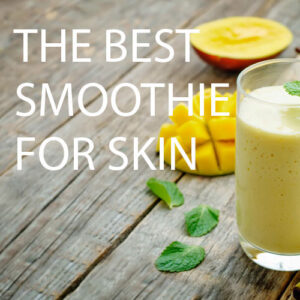
We all know that the key to good skin is healthy eating and hydration. And that drinking smoothies regularly can help to increase our nutrient intake. But what makes the best smoothie for beautiful skin?
A balanced intake from a broad spectrum of healthy wholefoods will cover many of the bases for optimum nutrition but there are certain ingredients and superfoods that will target the specific needs of your skin.
From flushing out toxins for a clear complexion to boosting the nutrients needed for cell renewal and repair, these are the ingredients that make up the best smoothie for skin.
What does my skin need to look its best?
Other than enough sleep, a healthy diet, and plenty of water, your skin needs certain nutrients to help get that radiant glow.
Antioxidants
Unstable chemicals, known as free radicals, within the body can cause, amongst other things, rapid acceleration of aging; the exact opposite of everything that glowing skin needs. Loss of tone, lines and wrinkles, and a dull complexion can all be down to the chaos caused by free radicals. Collagen and elastin break down, affecting elasticity. Surface circulation is diminished, leading to lack of nutrients and loss of that rosy vibrant glow.
Antioxidants protect the body from this damage and can even reverse the signs pretty quickly. Amongst these are flavonoids, carotenoids, vitamin E and vitamin C. Vitamin C is a powerful antioxidant that is key to collagen production. It aids cellular growth and strengthens blood vessels, restoring skins firmness and resilience. It also offers UV protection.
Hyaluronic acid, a favourite ingredient of the beauty industry, works best from within. A water holding molecule, produced by the body, it helps skin to retain moisture, absorb nutrients, and get rid of waste. Also an antioxidant, hyaluronic acid stimulates collagen production so improves elasticity. Good to know.
Essential fatty acids
The components of healthy fats, essential fatty acids such as omega-3, -6, -7 and -9, support the skins natural barrier known as the lipid layer. This is what gives us hydrated, plump, smooth and supple skin. The right balance of EFAs is important and the modern diet can be overloaded with inflammatory omega-9. Increase omega-3 and omega-9, and rarer omega-7, to reap the benefits to the appearance of your skin.
Protein
Skin is made largely of protein so it goes without saying that eating plenty of protein can help with signs of aging such as loss of skin tone and wrinkles.
Sulphur
The mineral sulphur is essential for cell renewal and also helps to clear skin by detoxification and reduce age spots or sun damage.
The best smoothie ingredients for fabulous skin.
Nuts and seeds
Chia seeds are the richest known source of omega-3. They are anti-inflammatory, help to balance sebum production, and create an even skin tone. Flax seeds, pumpkin seeds, sunflower seeds and sesame seeds are also full of essential fatty acids that are beneficial to your skin. Almonds are an excellent source of antioxidant vitamin E. Macadamia nuts are a good source of rare omega-7, and also omega-9. Look out for LSA mix, a blend of flaxseeds, almonds, and sunflower seeds that you can easily add to smoothies.
Fruits
Berries are one of the best smoothie ingredients for skin there is. Blueberries, strawberries, and raspberries are all powerful antioxidants that boost circulation and increase uptake of skin nutrients for increased radiance and vitality. Strawberries contain skin firming silica. Blueberries contain pigments that can improve the appearance of dark circles around the eyes.
Kiwi fruit are an excellent source of vitamin C that aids collagen production. Bananas contain lutein that boosts elasticity for supple skin. Pomegranate is a known rejuvenator, helping cells to renew and rebuild. Pineapple is another great source of vitamin C.
Make use of melon and watermelon for its rehydrating properties. They are also a great low calorie base for smoothies. Avocado contains skin healthy fats and lutein to regenerate and nourish.
Lemon juice is one of the best smoothie ingredients for bright clear skin. Not only does it aid detoxification but it also boosts absorption of minerals and is a good source of vitamin C.
Dried berries and powders
There are certain berries that we use in dried or powder form, rather than fresh. Usually categorised as superfoods, these can be a powerful addition to your skin food regime. Goji berries contain zeaxanthin, to help with dark circles around the eyes. Full of vitamin C, and other antioxidants, goji berries are known to stimulate human growth hormone to stimulate cell turnover and minimise fine lines and wrinkles. Goji berries also moisturise and hydrate. Mulberries are a good source of resveratrol, an antioxidant known to help prevent aging. Acai berries are also a major source of vitamin C and other antioxidant compounds.
Vegetables
The minerals in celery help with fluid regulation. Celery also contains skin-firming silica. As does cucumber. Another important ingredient for hydration and also a source of skin-strengthening sulphur. Sweet potato may sound like a strange smoothie ingredient, but roasted it can add a smooth creamy sweetness. Do try it, as it is one of the few ingredients that can boost production of hyaluronic acid.
Green leafy veg such as spinach and kale are full of cleansing chlorophyll for bright clear skin. Try adding a spoon of greens powder as an easy way to boost your smoothies.
Carrots are full of anti-oxidant beta carotene that helps to rejuvenate skin cells. Try using carrot powder as an easy way to boost nutrients in your smoothies.
Oils and fats
If you have dry skin, or combination skin, you may want to boost your intake of healthy fats. Coconut oil is not only nourishing for dry skin but also contains a natural steroidal hormone that promotes skin elasticity. Olive oil contains anti-inflammatory vitamin E as well as omega-9 that aids the absorption of those all important omega-3s.
Extras
Green tea is an excellent source of polyphenols that boost blood flow to the skin. Matcha tea, the dried concentrated form of green tea has ten times the antioxidant power of green tea. Cacao, the raw unroasted form of cocoa is also a powerful antioxidant. Coconut water contains electrolytes for fast rehydration. Bee pollen is a source of bioflavonoid rutin, that also aids circulation and boosts blood flow to the skin. The proteins in bee pollen help to renew collagen and elastin for a firmer skin tone.
Oats have long been a traditional skin food, with B vitamins, calcium and collagen building silica. The carbohydrates in oats attract water and keep the skin hydrated; hence their amazing skin softening properties.
Now that you have an idea of what to put into the best smoothie for your skin, why not check out our smoothie ingredients? You can also buy gourmet groceries from our online store at wholesale prices.
The best greens for smoothies and how to make them taste good.
Green smoothies. The holy grail of health. Yet they can pretty much suck right? We all want the health benefits that come with maximising on our greens but no one wants to chug down cold green sludge of a morning. Or even worse, cold khaki sludge.
Like all good cooking, when it comes to making smoothies, less is more. A broad spectrum of delicious constant variety is way more desirable than throwing all the ingredients at the glass every morning in a misguided bid to optimise our health.
But why are we so keen on greens in a glass anyway? What are the best greens for smoothies and how do we get them to taste good and avoid the dreaded sludge syndrome?
Eat your greens! Or better still, drink them.
Leafy greens are the original superfood. Of the top twenty most nutrient dense fruit and vegetables, seventeen are leafy greens. Whilst they share certain characteristics such as high chlorophyll content, each is unique in its power to support health and healing. Therefore the best plan of action is to consume a wide range of leafy greens at every available opportunity.
The best greens for smoothies are all particularly nutrient dense (low in calories and high in nutrients) because of their low sugar content. They come packed with certain groups of vitamins,minerals, and other beneficial plant compounds known as phytonutrients. Natural chemicals found in plants, phytochemicals are designed by nature to support the health of the plant yet most are hugely beneficial to human health too. The following phytonutrients are found in leafy green vegetables…
Carotenoids
A group of powerful antioxidant compounds that support the immune system, benefit eye heath and may reduce risk of cancer.
Beta carotene - the body converts this into Vitamin A.
Lutein and Zeaxanthin are both linked to reduced risk of macular degeneration (failing eyesight associated with aging).
Flavonoids
Also rich antioxidant compounds, they may help to reduce cancer and heart disease. Vital for healthy cell communication, flavonoids are detoxifying and can decrease inflammation.
The best greens for smoothies are also rich in certain vitamins and minerals, and fibre.
Vitamins
Vitamin A (converted from beta-carotene) - an antioxidant essential for vision, growth and reproduction, and production of collagen.

Vitamin C - an antioxidant essential for a healthy immune system, healing, tissue strength and growth, and absorption of iron.

Vitamin K - essential for blood clotting and metabolism of calcium. Helps to regulate blood sugar balance. Supports heart health and circulation.

Folate - needed to create new blood cells, proteins, and DNA. Basically essential for growth.
Minerals
Magnesium - needed for energy production, muscle activity, and heart health.

Iron - essential for healthy red blood cell function and energy release.

Potassium - regulates blood pressure and water balance. Also involved in hormonal balance.

Calcium - needed for healthy bones and teeth, regulates nerves and muscle function, regulates hormones and blood pressure.
Why smoothies?
Delicate nutrients can be destroyed during the cooking process so the best way to keep the nutritional profile intact is to consume greens raw. Not only does blitzing the nutrients down make them less bulky and therefore easier to eat more of, but the breaking down of the plant fibres makes these nutrients more easily available to the body. Unlike juicing, making a smoothie retains all the beneficial pulp and fibre.
What are the best greens for smoothies?
Although there are many different types of green vegetables, all of them bursting with benefits, some are more palatable in smoothies than others. Broccoli, for instance, has an impressive nutrient profile, but is strongly flavoured so can be hard to mask. Others, like spinach, blend really well and are milder in flavour.
Kale
A member of the cruciferous family, related to cabbage, broccoli and cauliflower, kale has powerful antioxidant properties. Rich in beta-carotene, vitamins C and K, and folate. Full of easily absorbed calcium and iron, kale is also an excellent source of chlorophyll.
Spinach
A member of the amaranth family, spinach is related to beets and quinoa. Packed with over a dozen different antioxidant flavonoids, spinach is a powerful anti-inflammatory. Rich in vitamin K, vitamin C and beta-carotene, as well as calcium, iron and potassium.
Top tips to make green smoothies taste good.
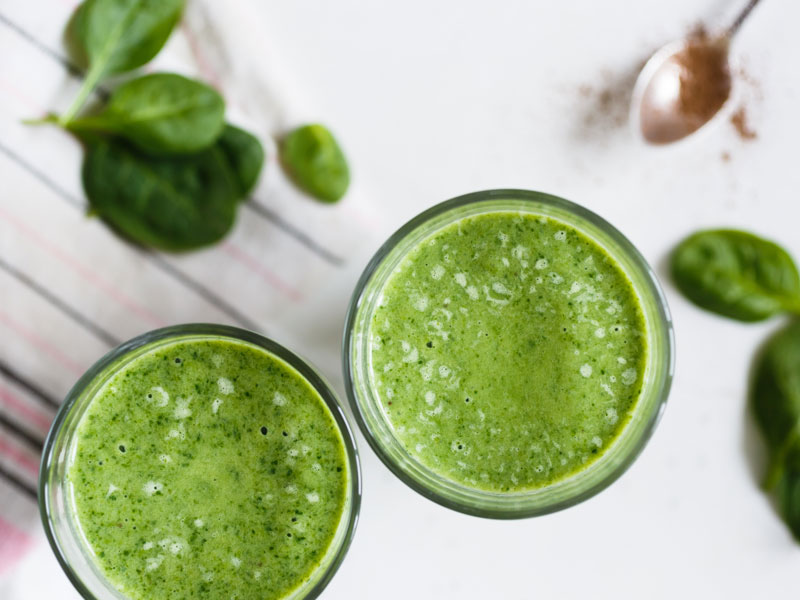
- Not only does fresh orange juice add a sweet sharp zing to a green smoothie, but it helps the body to absorb the mineral content too.
- Adding pineapple for sweetness also makes for quicker nutrient digestion.
- Apples and pears have a mild sweetness that pairs well with kale and spinach and keeps your smoothie looking fresh and green.
- The neutral flavour of cucumber works well with everything and its high water content adds to the liquid base.
- Use green powders to make life easier. Add a teaspoon or two of organic kale powder or spinach powder to your green smoothie ingredients. Or both.
- Go savoury. Use yoghurt as a base and add fresh herbs for a super savoury smoothie. Try a touch of garlic and a pinch of salt.
Check out the rest of our smoothie ingredients or head straight over to our bulk buy store.
How to get an easy nutrient boost with some simple veggie smoothie recipes

Hard root veg such as beetroot and carrots can be notoriously difficult to blend into smoothies and generally require roasting first if you want them to blend in smoothly. Yet a veggie smoothie is the ideal way to harness the power of vegetables and benefit from all of those unique nutrients.
So what’s the answer? We think that vegetable powders are the ideal solution and that making easy veggie smoothies is the best way to make use of these handy pantry ingredients.
What is the benefit of a veggie smoothie?
If it is a difficult thing to make, why bother with a veggie smoothie at all? Why not stick to fruit? It tastes nicer anyway.
Because of their lower sugar content, vegetables are considered to be more nutrient dense than fruit. And the same principles as drinking smoothies in general applies – you can fit more goodness in a glass than on a plate. And let’s face it, how many of us are preparing vegetables like beetroot on a daily basis?
Beetroot and carrots are packed with beneficial nutrients, but they can be hard to break down in a smoothie without roasting first. Yet they deliver so many vital nutrients it would be a shame to miss out.
Rich in beta-carotene, the precursor to Vitamin A, carrots promote eye health. High in fibre, they also fill us up and help stave off hunger for longer. Carrots also contain silicon, for beautiful skin and nails.
Beetroots contain a unique group of antioxidants called betacyanins, that support the liver, improve circulation and purify the blood. An anti-diabetic compound known as choline can help regulate blood sugar levels. Beetroot juice is also known to lower blood pressure soon after drinking it.
Make use of dehydrated vegetable powders to add the power of fresh raw vegetables to your smoothies. As these powders are so concentrated, we recommend that you use the powders as a boost to other ingredients to give plenty of texture. Try the recipes below as a starting point.
Recipe for a simple carrot based veggie smoothie

For 1 x 8oz serving
1 cup orange juice

1 cup frozen mango chunks

1 tablespoon goji berries

2 teaspoons carrot powder

1 tablespoon hemp protein powder
- Blitz in a blender until smooth.
Recipe for a simple beetroot based veggie smoothie
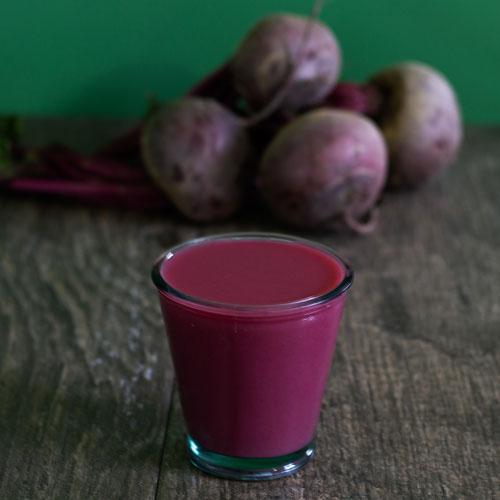
For 1 x 8oz serving
1 cup pomegranate juice

1 cup frozen berries

1 tablespoon acai powder

2 teaspoons beetroot powder

1 tablespoon LSA mix
- Blitz in a blender until smooth.
You can view all of these smoothie ingredients and more, or why not take advantage of bulk buy wholesale prices at our online store?
Make a healthy smoothie for kids with these three great recipes

Making a healthy smoothie for kids is more about increasing their fruit and vegetable intake than boosting with superfood nutrients. When we make smoothie recipes for adults, yes it is about getting in lots of the good stuff, but we also try to make every calorie count with nutrient boosts such as maca or goji.
Here we take some simple ingredients, and maybe a few hidden veg, to make some delicious child-friendly smoothies. Perfect for morning or afternoon snack time to keep energy levels up and little brains ticking.
Secret greens smoothie recipe
Sharp kiwi and mild sweet pear act as the perfect foil for the green goodness of spinach. You could use milk as the base to create a milder creamier smoothie, or just stick to water. You could use apple juice but that will up the sugar content for little teeth. Feel free to use fresh, frozen or canned pear; frozen will give a thicker, more frosted texture. You can add more or less liquid according to your child’s preference. Instead of fresh spinach, you could substitute with a half teaspoon of our spinach powder. Straight from the pantry, it is an easy way to sneak in those hidden veggies.
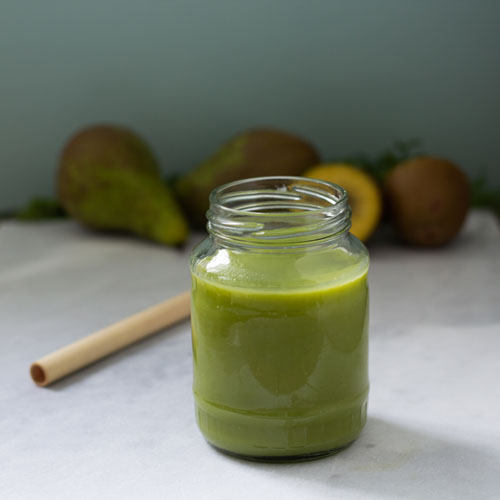
Makes 2 x 4oz servings
1 cup water or milk
1 cup pear chunks, fresh or frozen
1/2 cup baby spinach leaf
1/4 cup chopped kiwi fruit
- Add to a blender and blitz until smooth
Tropical treat healthy smoothie for kids
Kids seem to love mango. Maybe its the sweet fruity flavour or maybe its that thick slippery texture. Whatever the story, it is all good news as mango is packed with vitamin C and other healthy goodies. You can hide a bit of carrot in here for extra veg; use juice or substitute with half a teaspoon of carrot powder. Again, feel free to use fresh, frozen or tinned fruit and adjust the consistency to your child’s taste.
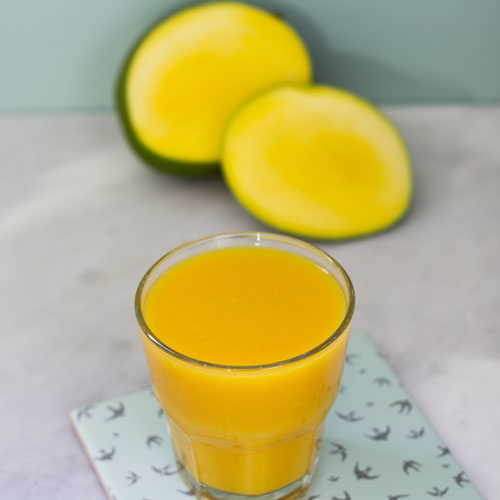
Makes 2 x 4oz servings
1 cup coconut milk
1 cup mango chunks, fresh or frozen
1/2 cup pineapple chunks, fresh or frozen
1/4 cup carrot juice
- Add to a blender and blitz until smooth
Peach melba shake smoothie recipe
By using more milk to fruit, and even a spoonful of whey protein powder, you create more of a shake than a smoothie. Using frozen fruit will give a thick shake effect, like a burger shake made with ice cream. For a quick storecupboard fix you could use our fruit powder; substitute about a teaspoon of either the berries or the peach. If you wanted to use both powders, add more banana for texture.
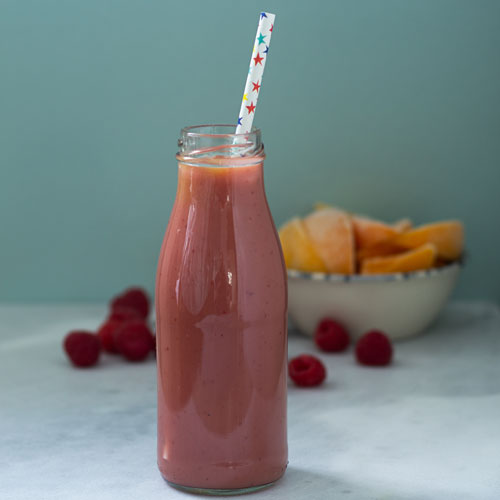
Makes 2 x 4oz servings
1 1/2 cup of milk
2 teaspoons whey protein powder
1/2 cup frozen raspberries
1 cup frozen peaches
1/2 banana
- Add to a blender and blitz until smooth
To sum up, it is easy to get more fruit (and even veg) into kids and set them up with good habits for life.
Check out our range of smoothie ingredients that are perfect for the pantry, or head over to our bulk store for organic wholesale prices.
Several really good reasons why you should choose acai berry powder

There are many good reasons to choose acai berry powder for smoothies.
Yes, as we shall see, acai (pronounced ah-sah-EE) is one of the most concentrated sources of antioxidants that nature has provided. And yes, it has flavour and textural qualities that make it the perfect ingredient for making smoothies. Yet there is another reason that we should feel good about consuming acai. Quite simply, acai is good for the rainforest, good for the farmers, and good for the communities they call home.
In this post we examine all of these reasons and then let you decide for yourself if acai really is amazing. Let’s start at the beginning.
What is acai?
Acai is the fruit of the acai palm, a towering tree native to Amazonian forests. A tall thin tree that grows up to 25m, with beautiful slender palm fronds several metres in length. Known as acai berries, but actually stone-fruits like plums or cherries, the inch-round fruits grow individually along grouped branches. Green when growing, purple-black when ripe, the acai berries contain mostly seed surrounded by a thinner layer of pulp.
Where does acai grow?
Acai grows in the forests across the Amazon basin. Largely thought of as a Brazilian superfruit, acai is actually grown in all the areas of the Amazon. Brazil makes up over half of the area, but the rainforest stretches through Peru, Colombia, Bolivia, Venezuela, Ecuador, Guiana, French Guyana, and Suriname.
How are acai berries harvested?
Acai berries are harvested by hand, by local ribeirinhos using traditional methods. With a palm leaf wrapped around the foot for traction they scale the trees, cut down the huge laden branches, and slide back down again. Then they pack the berries into woven baskets where they are taken by boat to be processed. Acai berries are a staple food in these regions, where they are soaked to soften the skin and then mashed. The fruits deteriorate within 24 hours so those destined for export are pulped and frozen within hours of harvesting.
The rising popularity of acai
Acai berries began to be exported in the late 1990s and have become one of the most economically important products of the region. Across the western world, demand for acai has continued to rise and with it the value. It seems that we just can’t get enough of this little Amazonian superfruit and the purple pulp finds its way into everything from juices and smoothies to soap and skin cream.
More often than not, when popularity of an indigenous product rises (like palm oil for example) it creates a monoculture. With all of the social and environmental issues that go with it. But acai resists mass production and will only survive and thrive within the biodiversity of the rainforest. Helping to rebuild vital ecosystems, rather than destroying them, the demand for acai has had a positive impact on the regions economy. Initiatives supporting sustainable production have sprung up across the Amazon basin, creating a stable income for the forest families.
Why acai is good for you.
But what fuelled this desire for acai, a little fruit from the far flung corners of the Amazon? Its nutrient dense status as a superfood. High in healthy fats (remember this a fruit we are talking about) and low in sugar, acai is a source of low calorie fibre that comes in at about 70kcal per cup.
One of natures most concentrated sources of antioxidants, acai is true glow food; inside and out.
Anthocyanins, that give produce its purple colour, lower oxidative stress and inflammation. By improving blood flow they have a positive effect on everything from wrinkles to heart health and memory.
Acai is full of anti-ageing vitamins A and vitamin E, as well as calcium. Essential fatty acids slow down release of the fruit sugars providing slow steady energy. Fibre keeps you fuller for longer.
Acai berries are a true superfood. Find out just why superfoods are so good for you.
What does acai taste like?
Described as a creamy berry flavour with bitter chocolate notes, acai shares flavour compounds with red wine and cacao. The fats give it the creamy taste and texture that make it so perfect for smoothies, with a rich fruity tartness that can only berries can bring. It has an earthy element, with tones of blackberry, raspberry and pomegranate.
What is the best acai for smoothies?
Although the rise of the acai bowl was built upon frozen acai pulp, it is freeze-dried acai powder that has made its home in our pantry. Highly concentrated, and easy to blend, a little acai powder goes a long way. Avoid juice, even unsweetened with no additives it does not have the nutrient value of pulp or powder.
Take a look at our organic acai berry powder.
How to use acai for smoothies
Add a tablespoon of acai to your smoothies and acai bowls for a pretty purple hue, massive nutrient boost, and fantastic flavour. Acai pairs particularly well with the sweet creamy flavours of bananas, milks and dates. As well as the sharp fruity flavours of other berries. It also likes chocolate. But who doesn’t. Because of its fat content, acai brings a surprising richness to the palate.
So, as you can see, acai is about way more than just the spring in our step or the glow on our skin. And we think that is truly amazing.
Check out our range of superfoods Australia and take advantage of some great value bulk buys.
10 of the best ingredients for a deliciously healthy breakfast shake

Breakfast. If there was ever a time to indulge in a delicious healthy shake this is it. The best breakfast shake will set you up for the day with all the nutrients you need for sustained energy. And it should taste good too.
A good breakfast should be as nutrient dense as it is delicious, and ideally cover all the macronutrients of protein, fats and carbohydrates, with plenty of essential vitamins and minerals. A few additional superfood boosts will keep you firmly on track until lunch.
But what are the best ingredients to include in your breakfast shakes for a balanced morning meal?
What should my ideal breakfast shake contain?
To fuel the first part of your day you are looking for something that will fill you up without feeling sluggish and keep you fuller for longer. You want sustainable energy without stimulation. And you want that to come in a package that contains as many micronutrients as possible. Grains, nuts and fruits should cover it. Add a little milk, dairy or non-dairy is up to you, and you are good to go. More than ready.
Ten great ingredients for a healthy breakfast shake
Oats
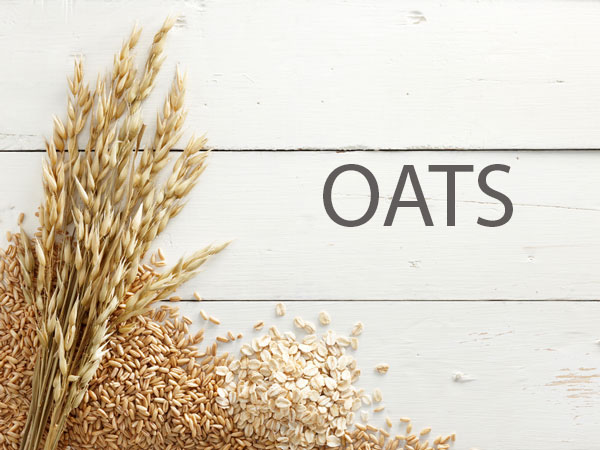
Quite possibly the best breakfast food there is, oats are ridiculously good for you. Rich in vitamins and minerals, oats are a great source of antioxidant polyphenols. The soluble fibre in oats, beta-glucan, leads to an increased feeling of fullness, delays glucose absorption and is even known to promote gut health.
As part of your breakfast shake they lend a thick creamy texture especially if left to stand for a while after blending. They also add a milky sweetness.
Banana

Banana is another breakfast champion. High in heart-healthy potassium, mood-enhancing magnesium, Vitamin C, and Vitamin B6 they also contain soluble fibre, in the form of pectin, that helps to control blood sugar and promote gut health. Bananas contain tryptophan, another mood-enhancing nutrient, the precursor to serotonin the feel-good neurotransmitter.
Like oats, they add creamy texture and milky sweetness to your breakfast shake. Plus, they taste like banana so its all good.
You could substitute banana for our banana powder…
Milk
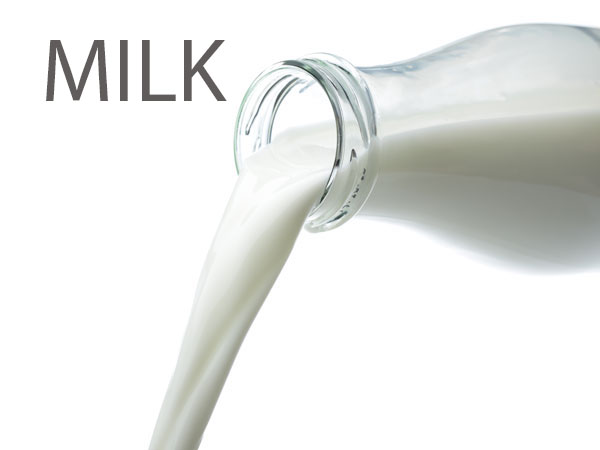
To turn your breakfast into a shake you will need a liquid. Any liquid is good, but for a thick breakfast shake with all the creamy elements like bananas and oats, milk is the obvious choice. Cow milk is a source of easily available calcium and is often fortified with Vitamin D. It is also a good source of protein, with a full spectrum of essential amino acids. Because of food intolerances, allergies, and also ethical choices, non-dairy milk is a popular alternative. They vary widely in nutrient content and flavour according to the manufacturer.
In your breakfast shake, milk will add creamy body and silky texture.
Protein powder

Protein powder is the modern way to add easily digestible protein, and therefore all essential amino acids, to your foods. You can choose whey concentrate, derived from cow milk, or vegan pea protein which is derived from um…peas. Extra protein will add to the satiety value of your shake, making you feel full and keep hunger away for longer. Whey concentrate contains no lactose so is an alternative for those with lactose intolerance.
Both types of protein powder will add creamy body to your shake. If you have no reason to stay away from dairy then choose whey protein for flavour and texture.
Almonds

Almonds are high in fibre, protein and heart-healthy monounsaturated fats. Full of antioxidant Vitamin E that supports the immune system and is great for skin, the skin of almonds also boasts many other antioxidant compounds. High in magnesium, almonds can help to control blood sugar.
Keep the skin on and blitz in your breakfast shake or add a spoonful of whole almond butter for extra body and a nutty taste.
Maca powder

Maca. Superfood of superfoods. From a group of healing plants known as adaptogens, maca adapts to the body strengthening and balancing its systems as needed. It gives energy without stimulation, regulates stress and balances hormones. And is also full of powerful phytonutrients.
In a creamy banana breakfast shake maca powder adds a malty undertone.
Honey

A natural sweetener, honey contains as many calories as sugar but also has a host of nutritional benefits. Composition of honey varies wildly, as does quality, yet it is full of bioactive plant compounds and antioxidants. Look for good quality, local varieties of honey – darker honey may contain more beneficial compounds.
Add just a teaspoon of honey for sweetness and nuance of flavour.
Mango
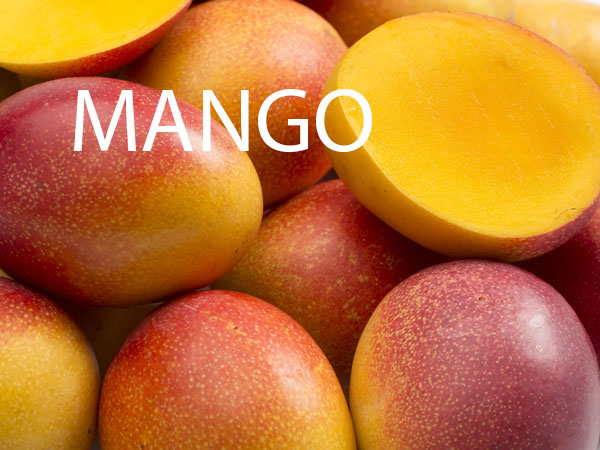
Mango is one of the highest food sources of vitamin C. Packed with fibre, vitamin A, and potassium as well as plenty of antioxidant phytochemicals, mango is a superfruit any time of day.
The richly textured flesh of mango makes it an ideal addition to a thick breakfast shake. Or choose our mango powder for an easy vitamin C boost.
Berries

Who doesn’t love berries. Among the most nutrient dense foods on the planet, berries are little powerhouses of vitamin C, vitamin A and antioxidants. Boasting the highest levels of antioxidants in all fruits, berries will help support your immune system and are also anti-ageing. They also taste amazing. Berries deterioriate quite quickly so freeze any fresh berries you have leftover.
Frozen berries add icy cold texture to your smoothies and go surprisingly well with creamy sweet flavours. For an instant flavour and nutrient boost add a few teaspoons of berry powder to your breakfast shakes.
Flax
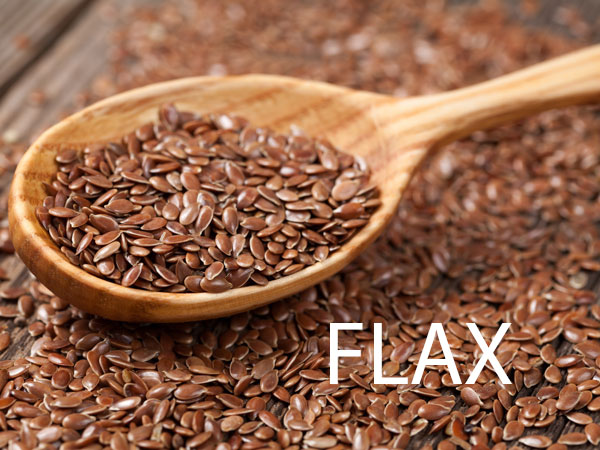
Bursting with anti-inflammatory essential fatty acids (aka EFA’s) flaxseed is really good at keeping your brain, heart and joints all healthy. With vitamin E for glowing supple skin, and a decent amount of fibre, flaxseed powder is a good addition to any smoothie, breakfast or otherwise. Flax is also hormone-balancing too, so is an excellent addition to any superfood arsenal.
Flax has a mild taste that is well hidden in smoothies, although it does particularly the thick and creamy variety with its vaguely nutty tones and thickening capacity. Try our LSA mix for flax, sunflower seed and almond all in one handy powder.
We hope you are feeling more confident to blitz up some healthy breakfast shakes.
Take a look at our smoothie ingredients or head on over to our wholefoods bulk store.
Breakfast healthy smoothie recipe. Get the best possible start to your day!
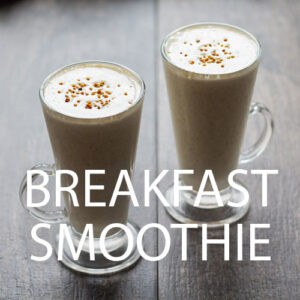
This breakfast healthy smoothie recipe is ready in minutes and can even be made using only store cupboard ingredients.
A thick and satisfying smoothie makes the perfect breakfast, quick to make and easy to digest it gives you everything you need in one delicious go.
So why not start your day the right way with all the nutrients you need to be at your best.
Breakfast healthy smoothie recipe
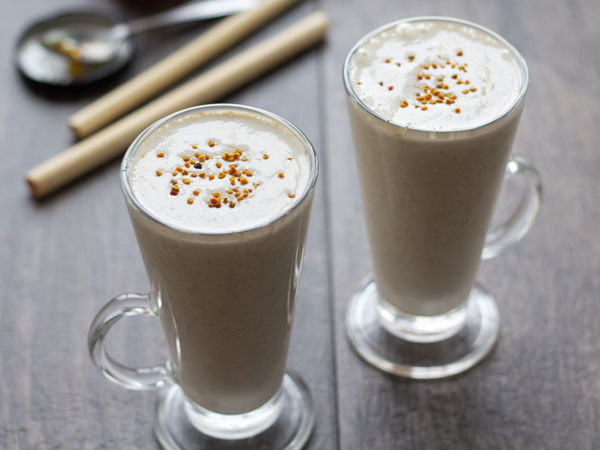
Easy to drink, and easy to digest, this breakfast smoothie will fill you up and keep you feeling fuller for longer. Made with milk as a base, it is up to you whether you go dairy or non-dairy. With added protein powder for a creamier texture and extra amino acids, again you can choose whether to go dairy or plant-based. Banana is the ideal fruit for breakfast, particularly in a smoothie where it blends into creamy sweetness. Not just about flavour though, banana packs a punch in the nutrient department with resistant starch for blood sugar control and plenty of heart-healthy potassium. Oats deliver that all important carbohydrate energy, but in the slow-release form of beta-glucan.
Throw in some maca powder for its magical powers and add in a dash of flax for fibre. By the way, did you know that both of these superfoods helps to balance hormones? Yeap. And that is just as relevant for men as it is for women.
To make this recipe you will need…
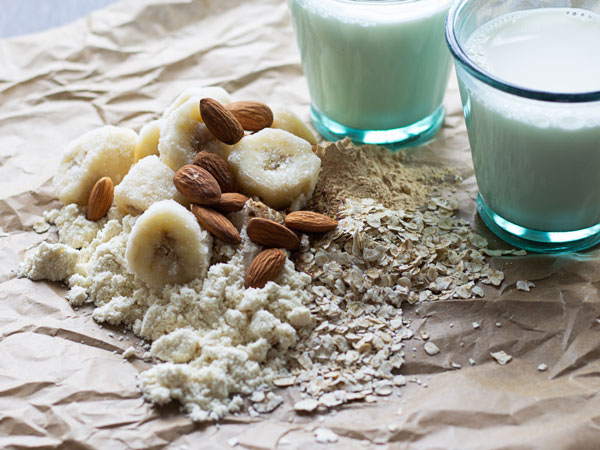
2 cups milk, dairy or non-dairy
1 banana, frozen in chunks or 1 tbsp banana powder
1/3 cup oats
3 tbsp whey concentrate or vegan protein powder
1 tbsp maca powder
1/4 cup raw almonds
1 tbsp flax powder or LSA mix
For the garnish
Drizzle of honey
1 tbsp bee pollen
And now for the method…
There’s only 3 steps.
- Blitz
- Pour
- Garnish with bee pollen and a drizzle of honey
Take a look at all of our ingredients for smoothies or you can even bulk buy online direct from us.
How to make the perfect frosted berry acai smoothie bowl in a personal blender
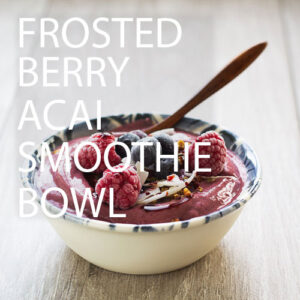
We have all seen a perfectly frosted gelato style acai smoothie bowl, with its ice cream swirls and candy colours. But unless you have a really powerful blender the reality can be quite different. A dreadful crunching noise. The smell of burning motor. By the time you tentatively crush down all the frozen bits, allowing the liquid time to do its work, you have…yay…a smoothie. One that you could drink with a very thin straw.
It is entirely possible to summon up beautifully frozen treats with a personal blender, and we are going to show you how. All it takes is a little forward planning.
To make your frosted berry acai smoothie bowl you will need…
1 large banana worth of frozen banana chunks

4 average size coconut milk ice cubes, made from thick tinned coconut milk

1 cup frozen berries, mostly large ones like strawberries

1 tbsp acai powder

1 tbsp whey concentrate protein powder

1 tsp vanilla

To garnish -

Frozen berries

Coconut flakes

Granola

Date syrup
How much time will I need?
Depending on the heat in your kitchen, you will need about 20 to 30 minutes waiting time to semi defrost your fruit and coconut ice cubes. Once that is done, it takes a few minutes to blend your acai smoothie bowl.
Step by step recipe for frosted berry acai smoothie bowl

Step 1 – semi-defrost
The crucial stage of getting a good texture in your smoothie bowl base is the partial defrosting of the ingredients. Leave the ingredients out to defrost slightly for about 20 to 30 minutes. If your kitchen is hot, they may need less time. You are looking to just take the edge off the hardness so that your personal blender can cope.
If you put the bowl into the freezer it will keep your frosted smoothie colder for longer.
1 large banana, frozen
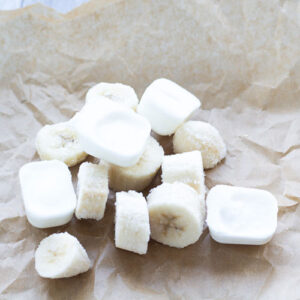
4 coconut milk ice cubes
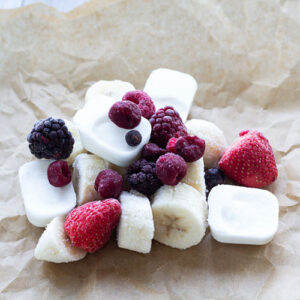
frozen berries
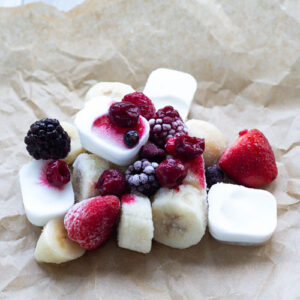
Step 2 – begin blitzing the ingredients

The coconut ice cubes are blended down first as they are harder than all the other ingredients. The whey concentrate and the acai powder add not only nutrients but help with the texture too.
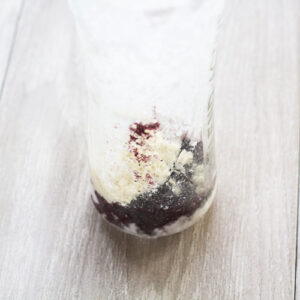
Add the powders and blitz to a fine snow.
Step 3 – add the semi-frozen fruits
Add the semi-frozen fruits to the blender and pulse until the smooth. The combination of the ice and the powders, plus the softened fruits, helps the blender to cope without the ingredients melting down. Notice that we are not adding any liquid at all.

Step 4 – garnish
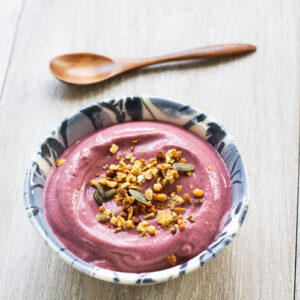
Add a little granola for crunch
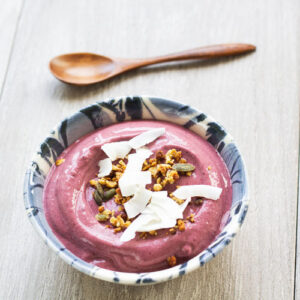
some creamy coconut flakes

beautiful frozen berries

A drizzle of date syrup for extra sweetness.
Eat and enjoy. We hope you have fun experimenting with flavours and textures. Don’t forget to visit our bulk buy store for all your acai bowl ingredients.
Why kombucha is one of the best ingredients for a smoothie
One of the best ingredients for a smoothie, kombucha is an excellent way to bring an interesting twist to your smoothies and acai bowls.
Kombucha is said to offer many health benefits whilst the fizzy texture and sweet sour flavours can bring endless interest to your smoothie recipes.
A mildly fizzy sweet/sour drink made from fermented tea, kombucha is brewed by adding a live culture, known as a scoby, to sweetened tea. A live mixture of bacteria and yeasts, this converts the sugar into a very small amount of ethanol and acetic acid. This accounts for the slightly vinegary taste. People have been drinking fermented tea for thousands of years and it is through increased interest in gut health that we are seeing a revival.
What are the health benefits of using kombucha as a smoothie ingredient?
Kombucha is one of the best ingredients for a smoothie for digestion because kombucha is an excellent source of probiotics. Live organisms that can improve digestion, probiotics help to balance the gut flora. Made from green or black tea, kombucha is also full of the antioxidant benefits these teas provide.
How can I use kombucha as an interesting ingredient in my smoothies?
Kombucha adds interest in the form of fizz. It also brings a sweet yet sharp taste. It makes an excellent alternative to water, juice or milks as a base. When added before blending, the result will not be fizzy but the bubbles form a nice cappuccino style froth on the top. Poured in as a top-up after blending, kombucha adds a nice fizzy edge. Try mixing fruit powders straight into kombucha for a quick nutrient boost.
Because kombucha comes in a range of flavours, you can make interesting combinations. Try mixing peach and goji powders with mango flavoured kombucha. Or add acai powder to apple and pomegranate. In the recipe below we use ginger kombucha alongside fresh ginger. Ginger is also know for its digestive properties so its a double whammy.
Recipe for pineapple and ginger kombucha smoothie
A refreshing blend of pineapple, lime and ginger with a hint of mint. Boosted with goji berries for extra antioxidant action, and enlived with the pep of ginger kombucha.
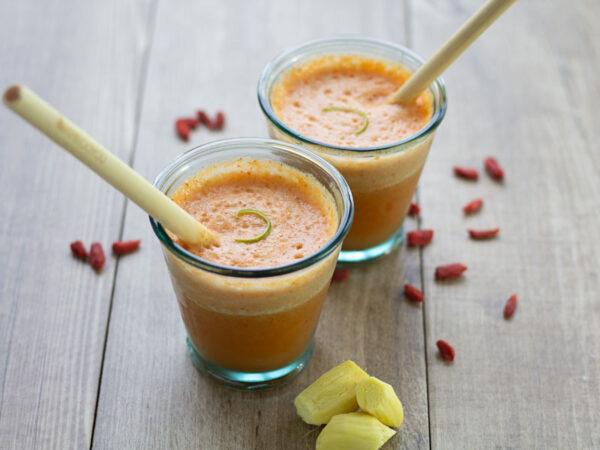
Makes 2 x 150ml servings, or 1 x 300ml serving
1 cup frozen pineapple

1 inch peeled fresh ginger

1 teaspoon lime zest

1 cup ginger kombucha

1 teaspoon goji powder

2 sprigs fresh mint
- Blitz all of the ingredients in a blender and serve.
If you haven’t tried using kombucha in your healthy smoothies and shakes, why not give it a go?
We have many other great smoothie ingredients and you can buy bulk food online at our wholesale store.
Why good granola is the key to a great healthy acai bowl
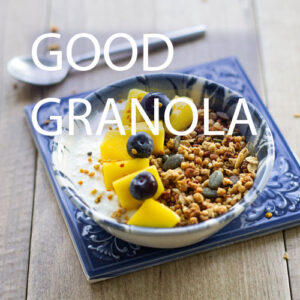
In this article we look at why good granola is the key to a great healthy acai bowl, but first we should probably clear up some of the semantics surrounding all things bowl and breakfast. And explain just where granola sits in the grand scheme of things.
Then we can talk about why it is really important to get the good stuff.
Let’s jump straight in…
What’s the difference between an acai bowl, a granola bowl, a bowl smoothie, and a breakfast bowl?
The difference between all these terms is really just semantics. The original acai bowl was made with acai and kickstarted the trend for healthy fruit based bowls at breakfast. Hugely similar to the bowl smoothie, the base contained acai puree blended into a semi-frozen almost gelato-textured thick smoothie. The top was dressed with insta-ready fruits, nuts and seeds. Strictly speaking the acai bowl should still be focused on acai, although now it can feature acai powder instead of puree. In reality though, the term acai bowl covers many bases.
The granola bowl is really more of a yoghurt/fruit combo, dressed in the same way as an acai bowl with plenty of fruit and, you guessed it, granola. The granola bowl is fairly interchangeable with the smoothie bowl, featuring a stiff smoothie base instead of yoghurt. The arrival of fruit powders has allowed this line to blur quite considerably as yoghurt mixes well with fruit and superfood powders.
A smoothie bowl is a thick smoothie, again with that semi-frozen gelato like texture, topped with an insta-ready array of fruit, nuts, seeds, and/or granola.
Breakfast bowl is a catch all term for the above and beyond. Often used to denote the fruit based bowls we have discussed above, but also anything that goes in a bowl served as breakfast. Anything from buddha bowls to a full on fry up. Granola optional.
Does an acai bowl always contain granola?
As we have seen, just as an acai bowl does not strictly require acai, it does not necessarily need granola. But granola is a great addition to these smoothie bowls, whatever name you call them by. Already chock full of nuts, grains and seeds, it is a handy shortcut to adding them all one-by-one. Not only that, granola has textures and tastes of all its own and is way more than the sum of its parts.
What goes into a good granola?
So here the crowd divides. A good granola is largely a matter of personal taste. Some like a lot of cereal. Some like a lot of sugar. Many prefer a soft chewy more-ish ness to a crisp crackling crunch. Others don’t like nuts. Others are allergic to nuts. Certain people choose not to eat grains with gluten. Some of them don’t eat grains at all. Really though, a good granola will be packed with a balance of high quality ingredients and will reach an acceptable level of nutrient density. Oats, butter, and sugar (and not in that order) may be delicious but they won’t be winning the superfood sweepstakes any time soon. On the other hand, a good proportion of nuts and seeds, fruit, and low sugar ingredients and flavours will get you plenty of nutritional bang for your buck.
Granola will generally contain, in varying amounts, the following ingredients…
Cereal base
Sometimes softly moreish, sometimes with more of a crunch, it is the grains in granola that give it texture and bulk. Although sometimes deemed gluten-free, as it is the processing of oats not the grain itself that can contain gluten, oats are often the main cereal in granola and are considered a gluten grain. Other cereals are present in granola and can add interest and texture, as well as nutrient diversity. True cereal grains such as rye, spelt, barley and rice all contain gluten. Pseudo grains such as buckwheat, amaranth, quinoa and millet tend not to contain gluten. On a Paleo diet, most grains are not allowed, although personal preference and nutritional tolerance is take into account.
Nuts
Although many varieties of nuts appear in granola, you would usually only find one or two types at a time. Nuts can be fairly strongly flavoured and too many varieties at once will just confuse the palate. Some people prefer no nuts as they can have a heavy going kind of crunch. But if you do like nuts in your granola, then plenty of them is a good indicator of quality as they are an expensive ingredient. Almonds, pecans and hazelnuts are particularly popular.
Seeds
Seeds are a particularly nutrient dense addition to any granola, and they add a particularly pleasing kind of crunch. Paleo granola will contain many seeds in place of cereal to make up bulk.
Fruit
Another crowd divider. Although fruit can be nutrient dense, it also brings with it more sugar. There is also the question of texture – some people just don’t like the chewy bits. Raisins are the mainstay of basic granola, but look out for berries such as blueberries, cranberries or even raspberries. Apple is a nice addition to a granola, and of course there is the tropical trilogy of pineapple, mango and papaya. Apricots, dates and sour cherries have all been known to make an appearance.
Other bits
Chocolate chips (or their superfood cousin cacao nibs) are another crowd divider. There are those who do and those who just don’t. Coconut flakes tend to be present in tropical type mixes but can also find their way into other types of granola too. If you like coconut then it can be a good way of adding sweetness.
Sweeteners
Most granola will have some form of sweetness added to it, other than the natural sweetness of dried fruit. It is the toasting of ingredients and the addition of fat and sugar that makes granola granola and not muesli. Honey and maple syrup bring more depth of flavour. Alternatives may include agave or date syrup. A good quality granola will be sweetened with unrefined sugars such as honey or maple and keep these to a minimum.
So, although choice of granola for your healthy acai bowl is a personal thing, quality is important. Look for low sugar varieties made with plenty of good quality ingredients such as nuts, seeds, alternative grains and dried fruit.
Is it important that my granola is organic?
Organic, or at the very least minimum intervention, is important in terms of flavour, quality, and also for the environment. What this means is that although farmers may strive to follow organic farming methods, actual certification may be financially out of reach and take years to achieve. Modern intensive farming methods have been particularly over used in cereal cropping and that has led to a decline in biodiversity and natural habitat. Most farmers understand the importance of the slower more natural approach and by supporting the smaller farmers we are making a bid for better quality food.
What are the different types of granola?
There are many types of granola you could choose for your healthy acai bowl.
Classic granola (R.A. C. perfect for the acai bowl or smoothie bowl)
Then there is always porridge, muesli and bircher muesli for the days when you want a change. Breakfast will never be boring…
Get a wide range of the better quality healthy granola products online at operafoods.com.au
Check out all of our acai bowl ingredients or buy in bulk online from our store.